Category Archives: TSC

Confirmed TSC Retirement Age Breaking TSC Announces Promotions, Trending TSC News on TSC Vacancies, TSC Promotions, TSC Grades/ Job Groups, TSC Internships, TSC Salaries, TSC Code of Conduct, Marketable TSC subject combinations and Latest Opportunities

TSC Recruitment Score Sheet for Primary School Teachers with Disability

TSC Recruitment Score Sheet for Primary School Teachers with Disability

The Teachers Service Commission, TSC, has issued and disseminated a new score sheet for the recruitment of Primary school teachers (those with disability).

PANEL SCORE SHEET FOR TEACHERS WITH DISABILITIES

APPLICANT’S NAME                                                                                TSC NO.                      

REGION                             COUNTY                                   SUB COUNTY            


GRADE                   YEAR OF GRADUATION                     PTE POINTS           DPTE POINTS                    


SCORING AREAS MAXIMUMSCORE ACTUALSCORE
A Professional P1 qualifications
6-30 points                                        40
31-45 points                                      35
46 -55 points                                     30
56-64 points                                      25
NB: The score does not include
teaching practice.
MAXIMUM SCORE 40
B Evidence of internship service
Served for three (3) years —————-Served for two (2) years ——————

Currently serving the first year of

1510
internship                                        05
MAXIMUM SCORE 15
C Length of stay since qualifying as a
teacher
i.     2017 and before —————— 35
ii.     2018                                       30
iii.     2019                                       25
iv.     2020                                       20
v.     2021 and after ——————— 15
MAXIMUM SCORE 35
D Diploma in Primary Teacher Education (CBC Upgrade) 

MAXIMUM SCORE


10

GRAND TOTAL 100


We confirm that the information entered in above is correct to the best of our knowledge


SELECTION PANEL SECRETARY

Name                                                                    TSC No.                             Sign.                                Mobile No.                               Date:                    


SELECTION PANEL CHAIRPERSON

Name                                                                    TSC No.                             Sign.                                Mobile No.                               Date:                    


Verified by:

TSC COUNTY DIRECTOR/ CHAIRPERSON, COUNTY SELECTION PANEL

Name                                                                    TSC No.                             Sign.                                Mobile No.                               Date:                    

TSC Online Recruitment Portal

You will be sent a security (validation) code on this number

For a quick login, click here.

TSC RECRUITMENT MORE NEWS

Quick Links

1.(Nyeri County) TSC Replacement Recruitment Teaching Vacancies per County-Nyeri County List of Schools with Replacement Vacancies as of July 2022,


2. (Kirinyaga County) TSC Replacement Recruitment Teaching Vacancies per County-Kirinyaga County List of Schools with Replacement Vacancies as of July 2022,


3. (Nyandarua County) TSC Replacement Recruitment Teaching Vacancies per County-Nyandarua County List of Schools with Replacement Vacancies as of July 2022,

4. (Murang’a County) TSC Replacement Recruitment Teaching Vacancies per County-Murang’a County List of Schools with Replacement Vacancies as of July 2022,

5. (Kiambu County) TSC Replacement Recruitment Teaching Vacancies per County-Kirinyaga County List of Schools with Replacement Vacancies as of July 2022,

6. TSC Replacement Recruitment Teaching Vacancies per County-County List of Schools with Replacement Vacancies as of July 2022,

7. (Nakuru County) TSC Replacement Recruitment Teaching Vacancies per County-Kirinyaga County List of Schools with Replacement Vacancies as of July 2022,

8. (Kirinyaga County) TSC Replacement Recruitment Teaching Vacancies per County-Kirinyaga County List of Schools with Replacement Vacancies as of July 2022,

(Kirinyaga County) TSC Replacement Recruitment Teaching Vacancies per County-Kirinyaga County List of Schools with Replacement Vacancies as of July 2022,

(Kirinyaga County) TSC Replacement Recruitment Teaching Vacancies per County-Kirinyaga County List of Schools with Replacement Vacancies as of July 2022,

(Kirinyaga County) TSC Replacement Recruitment Teaching Vacancies per County-Kirinyaga County List of Schools with Replacement Vacancies as of July 2022,

(Kirinyaga County) TSC Replacement Recruitment Teaching Vacancies per County-Kirinyaga County List of Schools with Replacement Vacancies as of July 2022,

(Kirinyaga County) TSC Replacement Recruitment Teaching Vacancies per County-Kirinyaga County List of Schools with Replacement Vacancies as of July 2022,

(Kirinyaga County) TSC Replacement Recruitment Teaching Vacancies per County-Kirinyaga County List of Schools with Replacement Vacancies as of July 2022,

(Kirinyaga County) TSC Replacement Recruitment Teaching Vacancies per County-Kirinyaga County List of Schools with Replacement Vacancies as of July 2022,

(Kirinyaga County) TSC Replacement Recruitment Teaching Vacancies per County-Kirinyaga County List of Schools with Replacement Vacancies as of July 2022,

(Kirinyaga County) TSC Replacement Recruitment Teaching Vacancies per County-Kirinyaga County List of Schools with Replacement Vacancies as of July 2022,

(Kirinyaga County) TSC Replacement Recruitment Teaching Vacancies per County-Kirinyaga County List of Schools with Replacement Vacancies as of July 2022,

(Kirinyaga County) TSC Replacement Recruitment Teaching Vacancies per County-Kirinyaga County List of Schools with Replacement Vacancies as of July 2022,

(Kirinyaga County) TSC Replacement Recruitment Teaching Vacancies per County-Kirinyaga County List of Schools with Replacement Vacancies as of July 2022,

(Kirinyaga County) TSC Replacement Recruitment Teaching Vacancies per County-Kirinyaga County List of Schools with Replacement Vacancies as of July 2022,

(Kirinyaga County) TSC Replacement Recruitment Teaching Vacancies per County-Kirinyaga County List of Schools with Replacement Vacancies as of July 2022,

(Kirinyaga County) TSC Replacement Recruitment Teaching Vacancies per County-Kirinyaga County List of Schools with Replacement Vacancies as of July 2022,

(Kirinyaga County) TSC Replacement Recruitment Teaching Vacancies per County-Kirinyaga County List of Schools with Replacement Vacancies as of July 2022

TSC Advertizes 36, 275 Promotion Vacancies for Teachers: TSC Promotions 2023

 TSC Promotions 2023/2024: Teachers Service Commission Lines up 36, 275 Promotion Vacancies for Teachers

Co-curricular Activities Calendar 2023; Dates and Venues for Primary, Secondary and College Games, Athletics, Drama and Music 2023

S. NO. VACANCIES CATEGORY APPLICATION PORTAL TYPE APPLICATION DEADLINE YEAR
1. 18, 073 Secondary school teachers Click Here to Apply Regular Friday, September 8, 2023 2023
2. 16,835 Secondary school teachers Click Here to Apply Regular Friday, September 8, 2023 2023
3. 1,076 Special needs  teachers Click Here to Apply Special Needs Friday, September 8, 2023 2023
4. 288 TTC trainers Click Here to Apply Tertiary teachers Friday, September 8, 2023 2023

TSC Promotions 2023/2024 Application Deadline

The deadline for application is on Friday 8th September, 2023. Interested and qualified applicants have two weeks to tender their request.

Approximately 36,275 teachers in regular and special needs schools are lined up for promotion as schools resume for the third term.

Teachers Service Commission (TSC) through its Chief Executive Officer Doctor Nancy Macharia has invited eligible candidates to apply online via the commission’s portal.

“Pursuant to this mandate, the Commission invites applications from suitably qualified teachers for the posts shown below in line with the career progression guidelines for teachers,” Dr. Macharia said.

TSC Promotion Vacancies 2023/2024

The advertised TSC promotion vacancies for the 2023/2024 cycle are distributed as follows

S. NO. VACANCIES CATEGORY APPLICATION PORTAL TYPE APPLICATION DEADLINE YEAR
1. 18, 073 Secondary school teachers Click Here to Apply Regular Friday, September 8, 2023 2023
2. 16,835 Secondary school teachers Click Here to Apply Regular Friday, September 8, 2023 2023
3. 1,076 Special needs  teachers Click Here to Apply Special Needs Friday, September 8, 2023 2023
4. 288 TTC trainers Click Here to Apply Tertiary teachers Friday, September 8, 2023 2023

TSC Promotions 2023/2024 Application Deadline

The deadline for application is on Friday 8th September, 2023. Interested and qualified applicants have two weeks to tender their request.

The upcoming promotion will impact 18,073 secondary teachers, 16,835 primary teachers, 1,076 teachers in special needs schools, and 288 instructors in teacher training colleges (TTC).

The move will affect chief principals, principals, deputy principals, senior masters, and secondary school teachers.

Others are senior lecturers in TTCs, head teachers, deputy head teachers, and senior teachers in both regular and special needs primary schools.

Among these, 12,716 teachers will be promoted to senior masters IV in high schools, while 10,819 will be promoted to senior teachers II in primary schools, both in regular schools.

Additionally, there will be 3,040 senior teachers, 1,930 deputy head teachers in regular primary schools, and 1,928 teachers promoted under secondary teacher I.

This announcement follows a statement by President William Ruto that the promotions reflect the government’s commitment to improving teacher welfare.

Speaking at Nakuru State House after hosting a State Gala for winners of the 95th Kenya Music Festival, the Head of State said that funds have been allocated to support the process.

“In this financial year, we have provided for the promotion of 5,000 teachers directly and 36,000 teachers indirectly. We have allocated Sh1 billion to facilitate this process. We must ensure we promote those teachers who excel in their line of duty,” Ruto said.

The president directed that priority should be given to teachers who have been involved in training students in drama and music.

“I want to recommend that teachers who have scripted, trained, and directed students to the festival should join those to be promoted in the cycle. Those who have excelled have gone beyond the call of duty.”

NB: – Candidates in Asal and Hard-to-staff counties who have served in the current grade for at least 2 years are eligible.

Candidates who are successful in the interviews shall be required to present valid Chapter 6 documents before they are appointed

TSC Full List Of Transferred Teachers And Principals In Laikipia County, Rift Valley Region

2023 TSC list of transferred Teachers and Principals in Laikipia County, Rift Valley Region


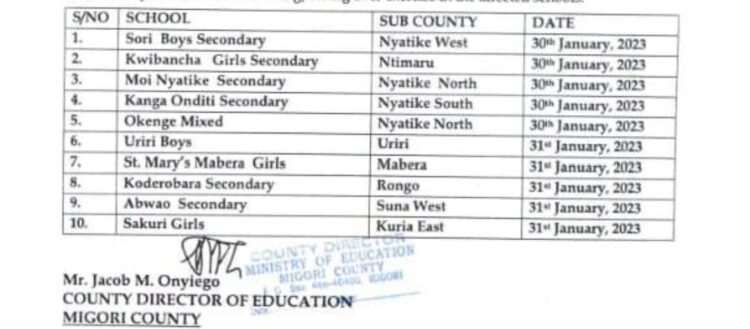
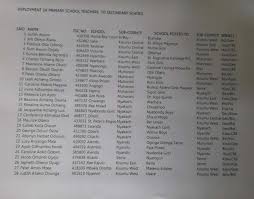
Laikipia County TSC Transfer List 2023– The Teachers Service Commission (TSC) has released lists of transferred teachers and principals in Laikipia County. The official reporting dates for transferred teachers are 30th January 2023 and 31st January 2023. Fortunately, the transferred teachers have got a grace period of two weeks to report to their new workstations. This means that the deadline for reporting is on Monday, February 6, 2023. In the TSC List of transferred teachers 2023 for Laikipia County a few schools have been affected among them Daiga Secondary School and Nanyuki High School.

S/NO NAME SCHOOL COUNTY REGION SCHOOL TRANSFERRED TO COUNTY REGION
1. Oliver Munishi Nanyuki High School Laikipia

County

Rift Valley  Retired Retired Retired
2. Leonard Karau Daiga Secondary School Laikipia

County

Rift Valley A school in Ntrimiti Laikipia Rift Valley


TSC List of Transferred Teachers 2023

  1. 1, 948 primary school head teachers
  2. 189 deputy head teachers
  3. 1, 316 Secondary School teachers
  4. 226 secondary school principals
  5. 1,093 primary school teachers
  6. 12, 019 regional transfers
  7. 2, 594 inter-regional transfers

TSC Transfers Selection Criteria 2023

  1. Gender parity
  2. Disability
  3. Health
  4. Age

TSC list of transferred teachers 2023 per county

  1. Kakamega County List of TSC Transferred Teachers 2023 handing over and reporting dates,
  2. Vihiga County List of TSC Transferred Teachers 2023 handing over and reporting dates,
  3. Bungoma County List of TSC Transferred Teachers 2023 handing over and reporting dates,
  4. Busia County List of TSC Transferred Teachers 2023 handing over and reporting dates,
  5. Kisumu County List of TSC Transferred Teachers 2023 handing over and reporting dates,
  6. Kisii County List of TSC Transferred Teachers 2023 handing over and reporting dates,
  7. Homa Bay County List of TSC Transferred Teachers 2023 handing over and reporting dates,
  8. Migori County List of TSC Transferred Teachers 2023 handing over and reporting dates,
  9. Siaya County List of TSC Transferred Teachers 2023 handing over and reporting dates,
  10. Nyamira County List of TSC Transferred Teachers 2023 handing over and reporting dates,
  11. Mombasa County List of TSC Transferred Teachers 2023 handing over and reporting dates,
  12. Kwale County List of TSC Transferred Teachers 2023 handing over and reporting dates,
  13. Kilifi County List of TSC Transferred Teachers 2023 handing over and reporting dates,
  14. Tana River County List of TSC Transferred Teachers 2023 handing over and reporting dates,
  15. Lamu County List of TSC Transferred Teachers 2023 handing over and reporting dates,
  16. Taita Taveta County List of TSC Transferred Teachers 2023 handing over and reporting dates,
  17. Garissa County List of TSC Transferred Teachers 2023 handing over and reporting dates,
  18. Wajir County List of TSC Transferred Teachers 2023 handing over and reporting dates,
  19. Mandera County List of TSC Transferred Teachers 2023 handing over and reporting dates,
  20. Marsabit County List of TSC Transferred Teachers 2023 handing over and reporting dates,
  21. Isiolo County List of TSC Transferred Teachers 2023 handing over and reporting dates,
  22. Meru County List of TSC Transferred Teachers 2023 handing over and reporting dates,
  23. Tharaka Nithi County List of TSC Transferred Teachers 2023 handing over and reporting dates,
  24. Embu County List of TSC Transferred Teachers 2023 handing over and reporting dates,
  25. Kitui County List of TSC Transferred Teachers 2023 handing over and reporting dates,
  26. Machakos County List of TSC Transferred Teachers 2023 handing over and reporting dates,
  27. Kitui County List of TSC Transferred Teachers 2023 handing over and reporting dates,
  28. Makueni County List of TSC Transferred Teachers 2023 handing over and reporting dates,
  29. Nyandarua County List of TSC Transferred Teachers 2023 handing over and reporting dates,
  30. Nyeri County List of TSC Transferred Teachers 2023 handing over and reporting dates,
  31. Kirinyaga County List of TSC Transferred Teachers 2023 handing over and reporting dates,
  32. Murang’a County List of TSC Transferred Teachers 2023 handing over and reporting dates,
  33. KJiambu County List of TSC Transferred Teachers 2023 handing over and reporting dates,
  34. Turkana County List of TSC Transferred Teachers 2023 handing over and reporting dates,
  35. West Pokot County List of TSC Transferred Teachers 2023 handing over and reporting dates,
  36. Samburu County List of TSC Transferred Teachers 2023 handing over and reporting dates,
  37. Trans Nzoia County List of TSC Transferred Teachers 2023 handing over and reporting dates,
  38. Uasin Gishu County List of TSC Transferred Teachers 2023 handing over and reporting dates,
  39. Elgeyo Marakwet County List of TSC Transferred Teachers 2023 handing over and reporting dates,
  40. Nandi County List of TSC Transferred Teachers 2023 handing over and reporting dates,
  41. Baringo County List of TSC Transferred Teachers 2023 handing over and reporting dates,
  42. Laikipia County List of TSC Transferred Teachers 2023 handing over and reporting dates,
  43. Nakuru County List of TSC Transferred Teachers 2023 handing over and reporting dates,
  44. Narok County List of TSC Transferred Teachers 2023 handing over and reporting dates,
  45. Kajiado County List of TSC Transferred Teachers 2023 handing over and reporting dates,
  46. Kericho County List of TSC Transferred Teachers 2023 handing over and reporting dates,
  47. Nairobi County List of TSC Transferred Teachers 2023 handing over and reporting dates,

TSC LIST OF OFFENCES: TEACHERS, AVOID THESE “SIMPLE” MISTAKES/ OFFENCES THAT CAN LEAD TO YOUR INTERDICTION OR DISMISSAL BY THE TEACHERS SERVICE COMMISSION

TSC LIST OF OFFENCES: TEACHERS, AVOID THESE “SIMPLE” MISTAKES/ OFFENCES THAT CAN LEAD TO YOUR INTERDICTION OR DISMISSAL BY THE TEACHERS SERVICE COMMISSION

7 SIMPLE MISTAKES THAT CAN EARN A TSC TEACHER INTERDICTION WHICH KENYAN TEACHERS CAN EASILY AVOID

Kenyan teachers have in most cases found themselves getting interdicted, deregistered or dismissed over simple mistakes that they could have easily avoided.
These mistakes/ offences are enlisted under the TSC code of conduct and regulations which govern the behaviour of teachers deployed in Kenyan schools.
This article seeks to explain seven simple mistakes or offences that teachers commit which can earn them an interdiction or dismissal by the Teachers Service Commission.

7 SIMPLE MISTAKES TEACHERS MAKE THAT CAN LEAD TO AN INTERDICTION OR DISMISSAL BY THE TEACHERS SERVICE COMMISSION

1. Having carnal knowledge with learners (Immorality)

Adolescents can be very tempting but teachers should be made aware of the fact that any child who is still wearing a school uniform is not ready for “deflowering.”

Some people may argue that some girls or boys have attained the minimum legal age hence they should be considered and treated like grown-ups.

Do not forget that whenever TSC is handling any CK cases involving teachers, it is the learner’s word against you. It is therefore advisable to keep off learners whether they consent to your ‘pleas’ or not.

Acts considered to be part of immoral behaviour by TSC teachers include: having sexual intercourse with learners, sexual harassment, flirtation, exposing learners to pornographic materials, lesbianism, homosexuality/ sodomy and having love relationships with learners.

2. Teacher’s professional misconduct

Acts classified under professional misconduct include chronic absenteeism, desertion of duty and negligence of duty.

Desertion of duty refers to when a TSC employed teacher absents himself or herself for 14 continuous days (without official written permission from the head or deputy’s head).

This offence also includes failure to report back to school for reposting after the expiry of a TSC teacher’s study leave, failure to report to your new station or going for a study leave without being officially released.

Chronic absenteeism, on the other hand, refers to when a TSC employed teacher displays persistent or recurrent absence or lateness for duty.

Lastly, negligence of duty is a simple offence that can easily land a TSC employed teacher in trouble.

It involves the following: Deliberately neglecting any duty assigned or performing it carelessly, failing to teach all lessons on your time table, lack of professional documents such as lesson plans, schemes and records of work, awarding undeserved grades to learners, failing to turn up for your duty as a T.O. D or M.O.D, failing to attend official school meetings and assemblies and failure to accompany students during official functions.

3. Conviction of a criminal offence

A TSC teacher can get interdicted if s/ he is found guilty (convicted) of a criminal offence, jailed or given a non-custodial sentence since this renders the teacher in question “unfit” to continue serving as a teacher.

4. Infamous conduct in any professional respect
Infamous conduct by TSC teachers includes drunkenness or any form of intoxication during official TSC working hours, fighting in public or showing violence.

5. Insubordination
Insubordination can be simplified to mean disobedience/ undermining authority. Therefore, any act insinuating that a TSC employed teacher is undermining authority such as the head of a school, sub-county director or county director may lead to interdiction or dismissal by the TSC.

6. Forgery or impersonation (bribery and corruption)
If a TSC teacher provides fake signatures or stamps or obtains certificates and gets registered through fraudulent means then s/ he will be eligible for interdiction or dismissal.

Teachers who also engage in exam malpractices or misrepresent information can get interdicted or dismissed.

7. Embezzlement/ mismanagement/ misappropriation of school funds

Any TSC employed teacher should shun away from dipping his or her hands in the wrong cooking jar especially where school funds are involved.

Embezzlement refers to the fraudulent conversion of public funds and property into personal use.

Misappropriation, on the other hand, is the use of public funds for unauthorized/ wrong purposes.

Mismanagement is the handling of public funds or property in a manner likely to cause loss to the school.

(JOB GROUP H) LATEST TSC SALARIES FOR PRIMARY TEACHER I, GRADE C1, FORMERLY JOB GROUP H EFFECTIVE JULY 2020; 2020 TSC TEACHERS’ SALARIES

(JOB GROUP H) LATEST TSC SALARIES FOR PRIMARY TEACHER I, GRADE C1, FORMERLY JOB GROUP H EFFECTIVE JULY 2020; 2020 TSC TEACHERS’ SALARIES

This is a promotional grade for tutors in primary schools.  Besides other minimum selection criteria, teachers who would like to be upgraded to this Grade must have served as Primary Teacher II T-Scale 5 for at least three years.

These tutors’ current monthly salary stands at Sh 27, 195.


ALLOWANCES

It is however important to note that much as these teachers fall in the same grade/ job group, their monthly gross salaries differ depending on the location of their work stations. The same case applies to their TSC allowances. For instance, teachers posted to stations listed as TSC Hardship Areas get an extra Sh 8, 200.

Special Needs Teachers, SNE, also get an extra Sh 8, 200.

Teachers in Grade C1, former Job Group H earn the same amount of commuter allowance that is Kshs 4, 000 per month, irrespective of their workplaces.

The Commission also pays a flat rate of Kshs 4, 000 annually to these teachers as leave allowance in January.

Table 1: TSC Salaries for Primary Teacher 1, Grade C1 (Former H) posted in Nairobi and its environs

T-SCALE JOB GROUP GRADE CURRENT BASIC SALARY NEW BASIC SALARY EFFECTIVE JULY, 2020 COMMUTER ALLOWANCE HOUSE ALLOWANCE GROSS SALARY
1 H C1 27, 195 27, 195 4, 000 10, 000 41, 195
2 H C1 27, 195 27, 195 4, 000 10, 000 41, 195
3 H C1 27, 195 27, 195 4, 000 10, 000 41, 195
4 H C1 27, 195 27, 195 4, 000 10, 000 41, 195
5 H C1 27, 195 27, 195 4, 000 10, 000 41, 195
6 H C1 27, 195 27, 195 4, 000 10, 000 41, 195


Table 2: TSC Salaries for Primary school teacher I, job group H posted in former major municipalities (Mombasa, Kisumu, Nakuru, Nyeri, Eldoret, Thika, Kisii, Malindi, and Kitale

T-SCALE JOB GROUP GRADE CURRENT BASIC SALARY NEW BASIC SALARY EFFECTIVE JULY, 2020 COMMUTER ALLOWANCE HOUSE ALLOWANCE GROSS SALARY
1 H C1 27, 195 27, 195 4, 000 7, 500 38, 695
2 H C1 27, 195 27, 195 4, 000 7, 500 38, 695
3 H C1 27, 195 27, 195 4, 000 7, 500 38, 695
4 H C1 27, 195 27, 195 4, 000 7, 500 38, 695
5 H C1 27, 195 27, 195 4, 000 7, 500 38, 695
6 H C1 27, 195 27, 195 4, 000 7, 500 38, 695


Table 2: TSC Salaries for Primary school teacher I, job group H posted in other former municipalities

T-SCALE JOB GROUP GRADE CURRENT BASIC SALARY NEW BASIC SALARY EFFECTIVE JULY, 2020 COMMUTER ALLOWANCE HOUSE ALLOWANCE GROSS SALARY
1 H C1 27, 195 27, 195 4, 000 7, 500 35, 395
2 H C1 27, 195 27, 195 4, 000 7, 500 35, 395
3 H C1 27, 195 27, 195 4, 000 7, 500 35, 395
4 H C1 27, 195 27, 195 4, 000 7, 500 35, 395
5 H C1 27, 195 27, 195 4, 000 7, 500 35, 395
6 H C1 27, 195 27, 195 4, 000 7, 500 35, 395


Table 4: Salaries for Primary school teacher I, Job Group H posted in other areas


T-SCALE JOB GROUP GRADE CURRENT BASIC SALARY NEW BASIC SALARY EFFECTIVE JULY, 2020 COMMUTER ALLOWANCE HOUSE ALLOWANCE GROSS SALARY
1 H C1 27, 195 27, 195 4, 000 4, 200 38, 695
2 H C1 27, 195 27, 195 4, 000 4, 200 38, 695
3 H C1 27, 195 27, 195 4, 000 4, 200 38, 695
4 H C1 27, 195 27, 195 4, 000 4, 200 38, 695
5 H C1 27, 195 27, 195 4, 000 4, 200 38, 695
6 H C1 27, 195 27, 195 4, 000 4, 200 38, 695


Rekindled Hope For Teachers In Salary Rise CBA Deal as Union Explains Reason For Calling Off Planned Strike


Rekindled Hope For Teachers In Salary Rise CBA Deal as Union Explains Reason For Calling Off Planned Strike

The teachers have been crying about being burdened since the commencement of the new CBC curriculum.This has seen calls to TSC to employ more teachers to boost in the implementation of the new curriculum.Teachers have done enough to ensure that they clear the 2021 syllabus for all the terms.Schools are closing this week to pave way for the national examinations that are ready in the country.

The teachers had however threatened to go on strike.They have been crying foul of being shortchanged in the salary negotiations.The teachers unions a few months ago signed a non monetary CBA.This move angered teachers who expressed their anger in the social media.

As schools are closing,it is now reprieve for the candidates since the union has suspended the strike.Luckily in the suspension, Kuppet SG has explained why he has called off the strike.

As a way of giving hope to teachers,Today’s People Daily has established that Mr Misori has revealed that the government has assured them that the issues raised on salaries are under consideration and hence they have decided to give the Government ample time to address their issues before another talk.The middle section of the page below reveals so from the top.

Related News

Threat of strike looms as teachers’ unions, TSC talk


The two gigantic teachers’ unions have engaged their employer in make-or-break talks to avert a potential strike that could cripple national examinations next month.

The Kenya Union of Post-Primary Education Teachers (Kuppet) and the Kenya National Union of Teachers (Knut) are in crucial negotiations with the Teachers Service Commission (TSC) over a new pay deal.

The three signed the 2021-2025 collective bargaining agreement (CBA) last year that gave no monetary benefits to members following the expiry of the previous one that was worth Sh54 billion.

RELATED
PRIME
TSC, union engaged in pay rise talks
Education Feb 09
TSC calls teachers for pay talks days after Sossion exit
Education Feb 09
The unions argue that the economy has now improved. In a January 17 letter to TSC, Kuppet demanded a pay rise of at least 30 per cent and threatened to call a strike if the commission did not respond within 21 days. They responded on January 20.

“The commission is interrogating the issues raised therein, we will respond thereafter,” Mr Cavin Anyuor, the legal, labour and industrial relations director at TSC, said in the letter to Kuppet Secretary-General Akelo Misori.

The Kenya Certificate of Primary Education is scheduled begin on March 7 and end on March 9 while the Kenya Certificate of Secondary Education will run from March 14 until April 1. Apart from supervision of the examinations, teachers are also involved in marking.

Negotiate CBA
Kuppet’s National Executive Committee (NEC) yesterday met in Nairobi. Mr Misori and national chair Omboko Milemba did not respond to our phone calls and text messages. Knut also seeks to renegotiate its CBA to introduce monetary benefits. They are pushing for a pay rise of between 15 and 20 per cent.

“There’s a lot of progress being made. We are doing well. Once we are there, we shall invite you and let you know,” said Knut secretary-general, Mr Collins Oyuu. “We are talking. Some of these things are political.”

The union is engaged in a campaign to bring back teachers who quit between 2019 and June last year when TSC had a sour relationship with the leadership of then Knut secretary-general Wilson Sossion.

Its membership shrunk from 187,000 to 15,000 and many were left out of salary increment and promotions. The monthly earnings from union dues dropped from Sh144 million to just Sh11 million. This saw union staff go without pay for months while debts accumulated.

In its proposal, Kuppet wants the basic monthly salary of the lowest paid teacher to be raised from Sh34,955 to Sh59,425 and that of the highest paid increased from Sh118,242 to Sh153,715. It also wants an increase in the commuter allowance from Sh5,000 to Sh8,500 for the lower cadre teachers and Sh16,000 to Sh20,000 for the highest paid tutors.

If their demands go through, Kuppet members who qualify for hardship allowance will see it increased from Sh10,900 to Sh16,350 for the lowest paid teacher and Sh38,100 to Sh57,150 for the top earners.

Kuppet has also proposed a new risk allowance for science teachers that it wants to range between Sh5,465 and Sh30,587.

Budget Policy Statement
However, an analysis of the 2022 Budget Policy Statement (BPS) for the education sector has not factored in an allocation for teachers’ pay rise.

The report, which has been presented to the Committee on Education and Research of the National Assembly by the Parliamentary Budget Office, shows TSC has planned to use its increased allocation of Sh15 billion to employ 13,000 secondary school teachers and 9,000 interns to cope with exits and the expected increase in enrolment when junior secondary is rolled out in January 2023.

This will be bad news for teachers who have been hoping that their employer might offer them a new CBA. The issue of renegotiating the CBA was not discussed when TSC boss Nancy Macharia appeared before the parliamentary committee last week to discuss their budget proposals.

She told MPs allocations for other critical areas like promotion of teachers on competitive selection, roll-out of a national biometric enrolment and validation of teachers and gratuity to 3,358 contract tutors in northern Kenya had not been factored in.

“The commission would appreciate [Parliament’s help] for these areas to receive some allocation,” she said.


End of an Era: TSC Medical Scheme AON Minet to be replaced by SHA

Teachers medical cover AON Minet will be scrapped as the government eyes a review to give teachers a better medical cover similar to that of the civil servants.

Teachers will be moved from AON Minet cover to Social Health Authority (SHA) starting December 2025 in new TSC changes.

Teachers will be enrolled in the Public Service Medical Fund which is popular with civil servants.

This comes shortly after President William Ruto met thousands of teachers in State House where he promised to review the current teacher medical cover.

Ruto promised to review the current medical cover to ensure it is aligned with the present health needs of teachers and their families.

Teachers are paying for their medical cover through their monthly medical allowance but there have been numerous complaints from teachers over bad services.

Teachers in lower job groups, like Primary Teacher II (Grade B5), get Ksh1 million in inpatient coverage and Ksh150,000 for outpatient needs.

Meanwhile, senior educators, such as Chief Principals (Job Group D5), enjoy larger provisions, with Ksh3 million for inpatient care and Ksh450,000 for outpatient services.

Some benefits however remain consistent across the board, regardless of your job group. For instance:

  • Dental Cover: Ksh45,000
  • Optical Cover: Ksh60,000
  • Last Expense Cover: Ksh300,000

Maternity coverage, however, is scaled with job grades, ranging from Ksh120,000 for Grade B5 to Ksh300,000 for Grade D5.

If you’re a TSC-employed teacher between 18 and 65 years old, you’re covered under this scheme.

It also extends to your loved ones—you can add one registered spouse and up to four dependent children.

These children are eligible for coverage from birth until age 18 (or up to 25 if they’re in school). And here’s a thoughtful inclusion: there’s no age limit for children with certified disabilities.

Want to know what the plan actually covers? Let’s break it down:

1. Inpatient Benefits

You’re covered for almost everything you’d need in a hospital. This includes:

  • Doctor’s fees (surgeons, anesthetists, consultants)
  • ICU and HDU care
  • Medications and laboratory tests
  • Imaging services like X-rays, CT scans, and MRIs
  • Specialized treatments, including chemotherapy and radiotherapy
  • Costs for internal surgical appliances

Essentially, if you’re hospitalized, this plan has you sorted.

2. Outpatient Benefits

Outpatient care is equally robust and includes:

  • Routine visits to your general doctor or specialist
  • Diagnostic tests
  • Physiotherapy sessions
  • Treatment for chronic illnesses, such as diabetes or hypertension
  • HIV/AIDS care, including access to antiretrovirals

This means you don’t have to delay routine checkups or treatment for ongoing conditions.

3. Maternity Coverage

For teachers planning or expecting children, the maternity benefits are especially generous. They include:

  • Antenatal and postnatal care
  • Delivery costs (normal and C-section—whether elective or emergency)
  • Routine immunizations under the Kenya Expanded Programme on Immunization (KEPI)

With everything from initial checkups to delivery costs covered, it’s a reassurance every new parent will appreciate.

4. Dental and Optical Cover

Need a root canal or a new pair of glasses? This plan won’t let you down. Dental benefits include:

  • Common procedures like tooth extractions and scaling (if medically necessary)
  • X-rays and dentures for injury-related losses
  • Dental crowns for restorative care

For optical care, the benefits cover:

  • Glasses and lenses
  • Frames
  • Ophthalmic surgeries and related ultrasounds

These add-ons are crucial for everyday wellness, ensuring your vision and dental health get the attention they deserve.

Additional Perks You Should Know

This scheme isn’t just about the basics—it also addresses more complex health needs. You can count on:

  • Emergency evacuation (road or air) in critical situations
  • International referrals for specialized care
  • Support for terminal illnesses like cancer and kidney failure
  • Services for chronic conditions such as arthritis, diabetes, and hypertension
  • Rehabilitation for substance abuse or work-related trauma

TSC will not be able to employ interns on PnP terms, implement CBA

TSC will not be able to employ interns on PnP terms, implement CBA

The Teachers Service Commission (TSC), which employs 20,000 intern teachers, will be required to hire them on a temporary basis for a minimum of two years following the commission’s rejection of budgetary allocations for their permanent and pensionable employment.

On the same day that lawmakers were informed that the commission lacks the funds to raise the salaries of the over 300,000 instructors it employs, the news was disclosed.

Despite the fact that the commission’s budget has grown from Sh382.2 billion in the Budget Policy Statement (BPS) to Sh387.7 billion in the estimates, TSC claims that it still needs an additional Sh3 billion on top of the Sh5.71 billion shortfall in order to implement the conversion of intern teachers to permanent and pensionable terms.

TSC Director of Finance Cheptumo Ayabei and Director of Legal, Labour, and Industrial Relations Cavin Anyuor addressed the parliamentarians in order to defend their budget for the years 2025 and 2026. They told the MPs that the same was not included in the budget even though they had asked the National Treasury to make resources available for the intern teachers who were supposed to serve for a year.

“So, these teachers will have to serve for the next two years or as otherwise advised, as there is no provision to recruit them on permanent and pensionable terms,” Ayabei told the lawmakers, adding that the policy for recruitment of interns is after one has served for a year but is renewable.

“If we get funding, even now, we can put them on permanent and pensionable terms,” he added.

Despite the admission, committee members could hear none of it and told off the commission on its proposal to employ an additional 20,000 intern teachers in the current financial year. The MPs are instead urging TSC to first absorb the current lot of intern teachers on a permanent basis before it can think of hiring another lot.

The MPs who sit on the Education committee, chaired by Tinderet MP Julius Melly, further demanded that the commission engage the National Treasury to have the money availed as a matter of urgency. They also urged the commission to come up with a policy on recruitment of teachers who are 45 years and above as they have been neglected whenever the exercise takes place.

According to the MPs, it is regrettable that some of the old teachers have resorted to undertaking menial jobs including engaging themselves in boda boda businesses to fend for their families.

Baringo North MP Joseph Makilap claimed that allowing intern teachers to serve for two years would be going against a court ruling that capped internships at one year.

“The court ruling is clear that you can only serve for one year. Chair, these interns need to be confirmed by December,” he insisted.

Luanda MP Dickson Maungu demanded that the commission carry out targeted employment of the said teachers to ensure that they are all absorbed.

“I would wish that they would come out effectively and tell us the affirmative action policy that they will use to absorb the said teachers,” he pointed.

TSC informed the MPs that monies meant for Collective Bargain Agreement (CBA) has not been factored in the 2025/2026 budget yet the current agreement is coming to an end next month. Anyuor told the MPs they are yet to engage the teachers’ unions on the CBA as they have no budgetary allocation for the same.

“Currently the CBA agreement is expiring on June 30, 2025. We are yet to invite unions because we have no funding but we have engaged the Salaries and Remuneration Commission (SRC) on the same so that by the time we get there we know what we can offer. However, we have negotiated on the non-monetary aspect,” the legal director told MPs.

TSC is supposed to sign a new CBA with unions that is supposed to run from July 2025 to June 2029 as the current CBA signed in 2021 lapses next month.

Under the current negotiations, the unions are pushing for significant increase in salaries and improved allowances with Kenya National Union of Teachers (Knut) pushing for a 60 per cent salary increase in basic pay while the Kenya Union of Post Primary Education Teachers (Kuppet) is demanding for a salary hike ranging from 50 per cent to 100 per cent alongside the introduction of a risk allowance specifically for science teachers.

The commission also disclosed that they have only been allocated 50 per cent of the medical allocation for teachers. TSC said it has not allocated Sh3.5 billion for the group life, group personal accident and Work Injury Benefits Act (Wiba) in the current financial estimates.

On dispensation of disciplinary cases, the commission said it has been underfunded by Sh49 million while the vote for procurement of motor vehicles, office equipment, furnishings and refurbishments for the sub-county offices estimated at Sh830 million has not been funded.

While appearing before the same committee two weeks ago, Chief Executive Officer Nancy Macharia told the MPs that the commission has fully paid the second-year policy that ended November 30 2024, but due to exchequer delays they are yet to pay for the first and second quarters of the third policy, which commenced on December 1 2024 and March 1 2025 respectively.

TSC deployment results released as P1 teachers with higher qualifications decry biasness towards art teachers;

TSC deployment results released as P1 teachers with higher qualifications decry biasness towards art teachers;

TSC deployment results released as P1 teachers with higher qualifications decry biasness towards art teachers;

TSC Deployment Vacancies, Results and List 

Click Here or follow the link below to access the latest TSC deployment News- TSC deployment vacancies, list of deployed teachers per county, deployment letters and

The Latest TSC News Today on Deployment 2021/2022

TSC accused of deploying more art teachers to secondary schools, this is why

The latest TSC Deployment statistics show that only 3 per cent of the total 1000  were deployed to teach sciences in high school.

The Teachers Service Commission TSC has been hoarding TSC deployment lists making it difficult for affected teachers to know how exactly and what criteria the Commission uses to select teachers during deployment.

For the past three years, the Commission has been deploying 1,000 Primary School Teachers P1 teachers every financial year to teach in secondary schools having attained the minimum requirements. Complaints have been raised many a time over the mystery surrounding the criteria used to select teachers during deployment.

This year’s tsc deployment exercise has however revealed huge disparities between art and science teachers.

This great revelation has finally bursted the bubble with statistics at our disposal showing that the Commission deployed more art teachers compared to those teaching sciences.

TSC accused of favouring art teachers in the latest deployment

The Teachers Service Commission TSC has been bashed by science teachers seeking deployment to secondary schools following the revelation of shocking details indicating that only 3 per cent of science teachers were posted to high schools recently.

This, according to the affected teachers is discrimination leading to huge discrepancies between the number of promoted P1 science and art teachers.

New TSC Deployment Selection Criteria

The affected tutors have also implored upon the TSC to take some factors into consideration before releasing the final list of deployed P1 teachers.

Some of the key considerations that teachers want incorporated into the TSC Selection Criteria for teachers deployment encompass: the teacher’s year of graduation, age and quality of grades especially KCSE as in the case of TSC mass Recruitment or Replacement interviews.

Number of Available TSC Deployment Slots/Vacancies per county

A section of teachers have also requested their employer to increase the number of deployment vacancies from the normal 1000 to at least 3000 annually besides publicizing the number of deployment slots per county.

TSC Official Response to Allegations Bordering on Biasness towards Art Teachers in the Latest Deployments

In its defence, the Commission said that P1 tutors cannot be deployed to teach where there are no vacancies.

The Commission clarified the issue saying that teachers can only be deployed to teach in schools with specific subject needs.

About TSC Deployment of Teachers- Background Information on New Salaries

Initially, teachers were promoted using the schemes of service upon receipt of their acknowledgement letters.

Since 2014, TSC put a stop to automatic Promotions of teachers and adopted Career Progression Guidelines, CPGs which require teachers to attend interviews and compete for the available TSC promotion Vacancies.

Following successful deployment, the teachers would have their salaries backdated up to the time of graduation during the era of schemes of service. This is not the case with the new Career Progression Guidelines, CPGs.

The introduction of Career Progression Guidelines, CPGs has greatly disadvantaged some teachers who are now forced to stagnate in one job group in spite of acquiring higher qualifications.

This prompted KUPPET to raise the issues affecting diploma teachers with degree qualifications to the national executive board, NEB.

Some of the issues fronted include

Stagnation of diploma teachers with degrees in Job Group J, Grade C2

Staggered promotion of diploma teachers by TSC

Discriminative TSC Recruitment marking Scheme that disadvantages diploma teachers.


TSC gives date when 2025 promotion letters will be dispatched

TSC gives Gives date when 2025 Promotion Letters will be released 

The Teachers Service Commission (TSC) has given a Status update on the Release of Promotion Letters for successful teachers in 2025.

The Commission has at the same time given reasons why the promotion letters have not been dispatched.

Via an internal memo sent to all Regional Directors, County Directors, and Sub-County Directors, the TSC Chief Executive Officer Nancy Macharia further promises to release the letters once the hindrances are addressed.

“The Commission wishes to address the growing concern regarding the delay in the release of promotion letters for teachers who recently underwent interviews for various administrative and senior teaching positions.” Says Ms Macharia via the memo dated Wednesday May 14, 2025.

The promotion process was concluded and successful candidates identified in April.

Among other reasons, Macharia has cited Budgetary Alignment as being the remain reason for the delay.

She says final approval and release of funds from the National Treasury is still pending, which directly affects implementation timelines.

Further, ongoing Administrative Procedures are also hindering the release of the letters.

“The Commission is finalizing internal verifications to ensure compliance with relevant public service regulations and to avoid any legal or procedural challenges.” She says.

The promotion exercise was rocked by controversies with a section of Members of Parliament and Teachers’ unions opposing the exercise.

Macharia says Stakeholders’ engagement is being finalized to prevent further altercations.

She adds: “Consultations are ongoing with key stakeholders, including the Public Service Commission and the teachers’ unions, to ensure a smooth and transparent rollout.”

While acknowledging the building anxiety among teachers, the outgoing TSC Boss says that ‘the Commission is working diligently to resolve the remaining issues and will communicate the exact dates for the release and dispatch of promotion letters in due course.’

TSC gives Status update on the Release of Promotion Letters in 2025

The Teachers Service Commission (TSC) has given a Status update on the Release of Promotion Letters for successful teachers in 2025.

The Commission has at the same time given reasons why the promotion letters have not been dispatched.

Via an internal memo sent to all Regional Directors, County Directors, and Sub-County Directors, the TSC Chief Executive Officer Nancy Macharia further promises to release the letters once the hindrances are addressed.

“The Commission wishes to address the growing concern regarding the delay in the release of promotion letters for teachers who recently underwent interviews for various administrative and senior teaching positions.” Says Ms Macharia via the memo dated Wednesday May 14, 2025.

The promotion process was concluded and successful candidates identified in April.

Among other reasons, Macharia has cited Budgetary Alignment as being the remain reason for the delay.

She says final approval and release of funds from the National Treasury is still pending, which directly affects implementation timelines.

Further, ongoing Administrative Procedures are also hindering the release of the letters.

“The Commission is finalizing internal verifications to ensure compliance with relevant public service regulations and to avoid any legal or procedural challenges.” She says.

The promotion exercise was rocked by controversies with a section of Members of Parliament and Teachers’ unions opposing the exercise.

Macharia says Stakeholders’ engagement is being finalized to prevent further altercations.

She adds: “Consultations are ongoing with key stakeholders, including the Public Service Commission and the teachers’ unions, to ensure a smooth and transparent rollout.”

While acknowledging the building anxiety among teachers, the outgoing TSC Boss says that ‘the Commission is working diligently to resolve the remaining issues and will communicate the exact dates for the release and dispatch of promotion letters in due course.’

Teachers’ Fresh salaries, promotions; Details of the 2021-2025 TSC- KUPPET Collective Bargaining Agreements (CBA)

Teachers’ Fresh salaries, promotions; Details of the 2021-2025 TSC- KUPPET Collective Bargaining Agreements (CBA)


Teachers’ Fresh salaries, promotions; Details of the 2021-2025 TSC- KUPPET Collective Bargaining Agreements (CBA)

TSC latest news on 2021-2025 CBA: The teachers’ boss Teachers Service Commission (TSC) has been relieved of the guilt fanned by the fact that classroom teachers received a raw deal in the previous CBA. This follows the Parliamentary Education Committee’s intervention that revoked SRC freeze of salary increment for teachers and other civil servants for the next four years last week.

Read Also

Latest TSC News on Intern Teachers’ Salaries 2022

Tsc-salary-increment-2021-2025-scheduled-tsc-teachers-salary-rise-teachers-to-wait-longer-as-tsc-seals-hopes-of-salary-increment


TSC recently reached an agreement with KUPPET on matters TSC salary rise for classroom teachers.

According to Kuppet’s proposal, classroom teachers are set ‘reap big’ from the new CBA after receiving a raw deal in the previous one. See the latest presser from Kuppet on the 2021-2026 CBA talks at the Naivasha retreat in March 2021.

Read Also

Tsc-salaries-and-pay-rise-for-teachers-2021

Tsc-new-salaries-2021-2022-tsc-corrects-anomalies-in-newly-promoted-teachers-pay-slips-senior-masters-effects-new-pay-rise-and-better-allowances-for-teachers-promoted-during-the-2021-2022-cycle

KENYA UNION OF POST-PRIMARY EDUCATION TEACHERS PRESS STATEMENT AT THE CONCLUSION OF THE KUPPET-TSC RETREAT AT THE NAIVASHA SAWELA HOTEL FROM 14 TO 18 MARCH 2021
KUPPET has held a very fruitful four-day retreat with the Teachers Service Commission to resolve policy and administrative challenges of the 2016-2021 CBA and review the status of negotiations for the new one for 2021-2026. This was the second retreat between KUPPET and the TSC, the first one having taken place in October/November 2019.

During the talks, it was clear that the union and the employer had undertaken their responsibilities under the CBA process. What remains is for the Salaries and Remuneration Commission to give its Advisory to the TSC to enable the employer to table a counter offer to the union. We are seriously concerned by this delay by SRC, since the expiry of the current CBA on 30 June is fast approaching.

1. NEW CBA TO GIVE TRUE WORTH OF CLASSROOM TEACHER
KUPPET and the TSC have developed new Job Descriptions capturing the true worth of a classroom teacher. The new Job Descriptions recognise the teachers’ leadership and technical work within and outside the classroom, which had been ignored by the evaluation tool previously used by the SRC.

There are up to 30 new roles of the classroom teacher, including:
(i) Class management
(ii) Substantial financial responsibility during outdoor activities like tours and sports.

In the new CBC curriculum, a teachers’ work will even be more complex.

2. PROMOTION OF C3 TEACHERS AND TTC TUTORS
The Job Re-Evaluation has resulted in the creation of a new opening in C4 for Senior Master IV and Senior Lecturer IV for those in TTCs who do not have administrative positions. At the moment, the Commission has advertised 6,680 vacancies for these cadres as the first step towards institutionalising C4 as a promotional grade from C3.

Under the CBC, the TTC tutors will be training teachers at the Diploma level, hence the repositioning of their roles. Administrators in TTCs including Deans and Registrars will have a clear career path with substantive appointments.

3. DIPLOMA TEACHERS
The career path for Diploma Teachers has been clarified. By the commencement of the 2016 CBA on 8 November 2017, more than half of teachers who had joined service at Job Group had obtained Bed degrees and transited to the Graduate Scheme of Service.

Among those who had not, those who had served for more than three years in one Job Group had been promoted to the next Job Group, i.e., Job Group k or L, under the common cadre promotions.

However, a small number of the teachers, who had served in one Job Group for less than three years, had their promotions following the scrapping of one common cadre promotional level. Following the union’s memorandums, the Commission has advertised positions specifically to this group of teachers. We understand that the Commission received fewer applicants than the number of vacancies it declared.

4. MATERNITY LEAVE FOR INTERN TEACHERS
The Commission agreed that, except for specific provisions of their contracts, all intern teachers will work under the same conditions as provided under the Code of Regulations for Teachers. The intern teachers qualify for maternity leave of 90 calendar days with effect from the expected date of delivery, as do other teachers.

5. POLICY ON POST-GRADUATE QUALIFICATIONS

The Commission agreed to suspend the requirement of a Master’s degree for Principals or other promotions within the teaching service. This is in line with regulations by the Public Service Commission which has scrapped the requirement of a Master’s degree for promotions at Job Group P and above. Post-graduate qualifications will be considered as an added advantage.

The union, however, demanded the introduction of a Post-Graduate Allowance for teachers who possess Master’s and PhD degrees irrespective of their position in service.

6. REDEPLOYMENT OF GRADUATE TEACHERS FROM PRIMARY
In readiness for the new CBC curriculum, the Commission will promote 1,000 graduate teachers who initially had P1 qualifications to secondary schools every financial year. By June 30, it shall have redeployed 2,000 of such teachers, and the redeployment will continue until the numbers are fully addressed. The teachers must have obtained a KCSE mean grade of C+ and C+ in two teaching subjects.

7. TEACHERS’ MEDICAL SCHEME
The meeting observed the numerous problems teachers face in accessing health services under the Medical Scheme. It was agreed that an inter-parties meeting between the TSC, Minet and KUPPET would be held soon to discuss the issues and recommend solutions.


Teachers should stop being “mean” and contribute towards the Covid-19 fund via M-Pesa Pay Bill or Payroll Deduction

Teachers should stop being “mean” and contribute towards the Covid-19 fund via M-Pesa Pay Bill or Payroll Deduction

TSC-Employed Teachers to contribute towards the covid-19 kitty, willingly

The Teachers Service Commission has reached out to teachers across Kenya, urging them to contribute towards the Covid-19 kitty.

TSC teachers are now free to make voluntary contributions to help battle the pandemic.

Through the mobile short message service, SMS, sent to teachers, the TSC indicating that the voluntary contribution can be sent via M-Pesa Pay bill or account number.


Covid-19 M-Pesa Pay Bill and Account Number

Willing TSC teachers and employees can send their contributions towards the covid-19 kitty via Pay bill number 625625 or account number 01001005707400.

“Dear teacher, TSC is playing its fight against coronavirus. You can join us by making a voluntary contribution to Pay Bill Number 625625 or account number 01001005707400,” read part of the message.

Covid-19 contribution via TSC Payroll


Teachers who would like to contribute through the TSC payroll can visit the TSC website www.tsc.go.ke for further instructions.

The money will be later channeled to the Kenya COVID-19 emergency response fund.


Civil servants

Public service workers who would like to contribute to the covid-19 kitty should do so in writing. This can be done by writing a letter to the head of civil service.

The letter should indicate the salary percentage to be deducted and the date when the deduction will be effected.


TSC TEACHER INTERNSHIP POSSIBLE INTERVIEW QUESTIONS

The Teachers Service Commission is set to hold interviews for teacher interns at the County levels.

consequently, all prospective candidates are thoroughly preparing to excel in the interviews. Here are a few questions and possible guidelines to help you excel.

TIPS ON HOW YOU CAN EXCEL DURING A TSC INTERVIEW


  • Can you briefly tell us about yourself?


Give you full name, nationality and your personality traits, for example, I am Maina Jefferson. I am a Kenyan.  By nature, I am an outgoing or extroverted person who likes establishing new social relationships. In addition to this, I am a goal-oriented person who is extremely passionate about the teaching profession.

N/B: be brief and avoid giving irrelevant information as this may attract public ridicule.


  • State your TSC Number 


I am a teacher number six hundred and ninety thousand, five hundred and fifty-one.

N/B: Do not give digits such as six, nine, two, seven, one, zero


  • Who is the Cabinet Secretary of the Ministry of Education, Science and Technology?


Professor George Magoha


  • What are the functions of the Teachers Service Commission?


The Teachers Service Commission is an independent commission that was established under Article 237 of The Kenyan Constitution 2010 and tasked with the following functions:

  • Vetting and registering trained teachers
  • Recruiting and employing registered teachers
  • Placing or assigning employed teachers in any public school or institution
  • Promoting and transferring teachers
  • Exercising disciplinary control over teachers.
  • Terminating the employment of teachers
  • Reviewing the standards of education
  • Conducting TSC interviews.
  • Reviewing the demand vis a vis the supply of teachers
  • Conducting in-service training for teachers
  • Advising the national government on matters related to the teaching profession


  • What is KICD in full?


Kenya Institute of Curriculum Development


  1. What are the roles of KICD?

The Kenya Institute of Curriculum Development has got the following roles:


  • Advising the government on matters related to curriculum development.
  • Evaluating, vetting and approving both local and foreign curricula 
  • Implementing policies related to curriculum development in both basic and tertiary education levels
  • Developing and reviewing curriculum support materials
  • Conducting research aimed at informing curriculum policies, review and development
  • Disseminating curriculum support materials through the mass media, e-learning and distance learning


  • Who is the Chief Executive Officer (CEO) of the TSC?


Dr. Nancy Njeri Macharia


  • What is SRC in full? 


Salaries and remuneration Commission


  • Who is the Chairperson of the SRC?


Lyn Mengich


  • What are the functions of the SRC?


The SRC is an independent commission established under Article 230 of The Constitution of Kenya 2010 with the full mandate to:

  • Set and review the remuneration and benefits of all state officers.
  • Advise the national and county governments on the remuneration and benefits of all state officers
  • Conduct comparative surveys on the current labour markets and trends in remuneration to determine the salaries of government officers.
  • Give recommendations on matters relating to salary and remuneration.
  • Make recommendations on the review of pensions payable to public officers
  • Determine the salaries and remuneration cycle to guide the parliament so that it can allocate adequate funds for easier implementation.
  1. What is KLB in full?

Kenya Literature Bureau

It is a publishing house and a state corporation in Kenya which was founded in the year 1947.

  1. What are the functions of KLB?

It is tasked with publishing and disseminating learning materials.


ALL THE BEST.

TSC Salaries Shocker for Promoted Teachers Following a Huge Disparity Between the Pay Rise Stated in their Promotion Letters and Teachers’ CBA

TSC Salaries Shocker for Promoted Teachers Following a Huge Disconnect Between the Pay Rise Stated in their Promotion Letters and Teachers’ CBA

TSC Salaries Shocker for Promoted Teachers Following a Huge Disparity Between the Pay Rise Stated in their Promotion Letters and Teachers' CBA

The Teachers service commission, TSC is a constitutional government agency that draws its mandate from article 237 of the Constitution to perform functions such as recruiting and promoting teachers in Kenya.

Besides this the Commission is mandated is to register, hire, transfer, deploy and exercise disciplinary control over all teachers countrywide.

TSC Promotions for Teachers

TSC Promotions are classified into two broad categories namely: competitive Promotions and automatic promotions for common cadre grades whereby the teachers are moved to the next grade without being subjected to any interviews after serving the Commission for a given period.

Earlier this year, approximately 32, 000 teachers were shortlisted for competitive TSC promotional interviews to fill 16, 152 available administrative slots.

The teachers turned up for the interviews up in designated TSC county offices countrywide.

Since the commission only wanted to fill 16000 vacancies due to limited funding by the government, it had to use a selection criteria which emphasised on gender, regional balance, experience, and affirmative action to sieve the interviewees.

However, from the look of things, the Teachers Service Commission, TSC must have considered the teachers’ length of service since the majority of those who were promoted to grade C4 have served for over 10 years in Grade C4.

TSC Promotion Letters

Lucky teachers who got upgraded received their promotion letters in May 2021 stating their new responsibilities, new T-Scales, and higher salaries.

Out of the 16000 lucky tutors, slightly over 6000 of them represent those that had stagnated in job group L or C3 for years.

It was all smiles for this lot that had stayed in one grade for an average period of 10 years without any annual salary increment that is meant to cushion workers against inflation and other vagaries.

Sample Letter 

Below is a sample letter of Promotion to senior master IV which is an entry grade to administration.

Below is a sample letter of Promotion to senior master IV which is an entry grade to administration.

The letter clearly stipultes the new responsibilities the teachers will be undertaking upon assuming their new roles.

The teachers are to remain in their current stations contrary to what many believed. There were fears that teachers would be delocalized to other areas upon Promotions.

Another important thing to note about the new position is that the performance will be based on annual performance contracting for school administrators.

New Salaries for TSC Promoted Teachers

According to the letter, the annual salary for teachers in this grade ranges from ksh 627,696-667,248 besides other allowances. This brings the maximum for this job group to Ksh 55,000 per month.

However, a close look at the CBA 2017, the basic salary for job group C4 ranges between ksh 52,308-65,385 as shown below.

The new salary therefore is lower than what the CBA had stated. Take a quick look at the image below

TSC Salaries Shocker for Promoted Teachers Following a Huge Disparity Between the Pay Rise Stated in their Promotion Letters and Teachers' CBA

Hope the commission will move with speed and correct this anomaly, otherwise teachers won’t feel the monetary impact of the promotion.

All the best to the new administrators. Feel free to share your thoughts and comments on this on our comments platform.


TSC Internship Contract Renewal 2021/2022; How many Times Can TSC  Intern Teachers Renew Their Contract? Commission Provides Answers, Check out the Fate of Internship Teachers 2021-2022 Below


TSC Internship Contract Renewal 2021/2022; How many Times Can TSC  Intern Teachers Renew Their Contract? Commission Provides Answers, Check out the Fate of Internship Teachers 2021-2022 Below


TSC Internship Contract Renewal 2021/2022; How many Times Can TSC  Intern Teachers Renew Their Contract? Commission Provides Answers, Check out the Fate of Internship Teachers 2021-2022 Below
TSC Internship is a newly introduced Pre-service teacher training aimed at addressing the ever widening teacher: learner ratio.

In 2020, the Teachers Service Commission, TSC renewed the TSC Internship Contract for teacher interns recruited in December 2019. What these teacher interns are unaware of however is the maximum number of times that they can refresh their TSC Internship Contract.

The good news is that TSC has announced the fate of Internship teachers whose contract will end this year December both for senior and junior interns. This is after the teachers service Commission announced 6674 vacant positions in December last year which saw registered teachers fill those vacant positions.

What was funny is that some senior interns were barred from submitting their applications through the teachers service Commission portal. This posed a challenge and left senior interns wondering what will be their next move. What’s now mind blowing the senior interns teachers is what will happen when their contract comes to an end after it was extended for another one year.

From reliable sources, it’s clear that the senior interns and other intern teachers will not get a direct ticket into TSC permanent and Pensionable jobs without going through the due process. This has been done to bring equity and equality amongst all the graduates since there are intern teachers who might have graduated recently and secured an internship job and another graduate did not secure an internship position but graduated earlier. They argued that if they confirm these intern teachers it will disadvantage those who have stayed out for a long time.

Therefore, all the intern teachers who are in various institutions should understand that the only thing they can get as an added advantage is the ten marks awarded to them after completion of the contract. Otherwise, they will have to go through the due process of interviews.

Further information from reliable sources says that those who are in internship can renew their contract up to a maximum of five years, that’s if one would not have secured a TSC permanent job.


Possible TSC  promotion interview questions and their accurate responses 2021; A Detailed Guide to possible questions and answers for teachers who have been shortlisted to attend the upcoming interviews for TSC Promotions

Possible TSC Teachers’ promotion interview tips, questions and their accurate responses 2021; A Detailed Guide to possible questions and answers for teachers who have been shortlisted to attend the upcoming interviews for TSC Promotions

latest updates on TSC promotions.

Worth noting first is the fact that the Teachers Service Commission has initiated the process of finding suitable candidates to fill the 15, 000 Promotional slots announced at the beginning of the year.

If you have not checked the lists, click on the following link to confirm your being shortlisted or not status.

TSC lists of shortlisted applicants for Promotions 2021


In case you have been shortlisted, you need to arm yourself well for these interviews in order to answer the interview questions correctly. 

In this article we have provided you with all TSC interview questions and their responses.

Kindly remember to be as sincere as possible during the interview sessions.  For instance, if you are not sure about any of the asked questions just let the panel know so. There is no crime in saying you have no correct response.

Be as confident as possible. Remember to dress decently for the interviews. Read and revise the Code of Conduct and Regulations for teachers.

You need to be well versed with the current affairs.

You also need to be aware of all the interview areas and scoring guide. Read all the details here; Latest TSC Interview areas, questions and new marking scheme/ Score sheet for teachers seeking TSC Promotions; This is all you need to know

For a list of shortlisted candidates, click here.

TSC PROMOTION INTERVIEW QUESTIONS AND THEIR ANSWERS
1.What is the structure of the Ministry of education?

The Ministry of Education is led by the Cabinet Secretary. Under him are 3 Principal Secretaries and finally the Director General under them.

2.What is the overall role of the Minister for Education?
Formulation of policy direction and management of professional functions relating to education.
Developing and implementing projects and programmes.
Developing curriculum.
Initiating training programmes.
Running examinations.
Giving grant-in-aid to schools.
Dealing with audit report
Admitting and transferring students.
Dealing with discipline of students.
3.Who publishes for the Ministry of Education?
Kenya Literature Bureau KLB

4.What is the role of Kenya Institute of Curriculum Development KICD, inspectorate and Kenya National Examinations Council K.N.E.C?

Mandates of the KICD
The Kenya Institute of Curriculum Development (KICD) is mandated to perform the following functions:

Advise the Government on matters pertaining to curriculum development
Evaluate, vet and approve, for application in Kenya, any local and foreign curricula and curriculum support materials in relation to the levels of education and training
Implement the policies relating to curriculum development in basic and tertiary education and training;
Initiate and conduct research to inform curriculum policies, review and development.
Collect document and catalogue information on curricula, curriculum support materials and innovations to create a data bank and disseminate the information to educational institutions, learners and other relevant organizations
Print, publish and disseminate information relating to curricula for basic and tertiary education and training
Collaborate with other individuals and institutions in organising and conducting professional development programmes for teachers, teacher trainers, quality assurance and standards officers and other officers involved in education and training on curriculum programmes and materials
Develop disseminate and transmit programmes and curriculum support materials through mass media, electronic learning, distance learning and any other mode of delivering education and training programmes and materials
Promote equity and access to quality curricula and curriculum support materials
Offer consultancy services in basic and tertiary education and training
Incorporate national values, talent development and leadership values in curriculum development
Receive, consider, develop and review curriculum proposals
Perform such other function as may be assigned to it under the KICD Act No.4 of 2013 or any other written law.
Develop, review and approve programmes, curricula and curriculum support materials that meet international standards for : early childhood care, development and education, pre-primary education, primary education, secondary education, adult, continuing and non-formal education, teacher education and training, special needs education and technical and vocational education and training.
Providing oversight on management of the school.
Monitoring curriculum delivery and learning achievement in the school.
Mo ensure that the students engage in extra curriculum activities.
To ensure the competence of the teachers in delivery of the content of the curriculum.
Develop all institutional policies and ensure accountability and prudent use of institutional resources.
Mobilising resources for the institution development based on agreed strategic planning.
To promote networking and partnership for the school
To discuss and approve comprehensive termly and annual reports and forwards them to the county education board (CEB).
To promote quality education and training for all learners in accordance with the standards set under the education acts, national policies, and county government policies
To supervise and ensure quality in curriculum implementation and delivery and oversee the conduct of examination and assessments of school.
To ensure and assure provision of proper and adequate proper physical activities as well as teaching and learning resources in order to create an enabling environment for the school community to perform their duties effectively and achieve set objectives of the institution.
The core functions of the KNEC are to:

Develop national examination tests;
Register candidates for the KNEC examinations;
Conduct examinations and process the results;
Award certificates and diplomas to successful candidates;
Issue replacement certificates and diplomas;
Conduct educational assessment research;
Conduct examinations on behalf of foreign exam boards.
5.What are the national goals of education?
To foster nationalism, patriotism and promote national unity.
To promote social, economic, technological and industrial needs for national development.
To provide individual development and self-fulfillment. To promote social equality and responsibility.
To promote sound moral and religious values
To promote international consciousness and a positive attitude towards other nations.
To promote a positive attitude towards good health and the environment.
6.What is the composition of the board of Management of a school and how are they chosen?

B.O.M is established under Section 55 of The Basic Education Act 2013.It is composed of;

The head of the schools as the secretary of the board,
6 persons elected to represent parents or local community in case of County Sec. School
1 person nominated by the county board.
1 person representing teaching staff elected by teachers.
3 representatives of school sponsor
1 person to represent special interest group.
1 person to represent persons with special needs.
1 representative of the student council as an ex-officio.
7.Differentiate between the roles of the B.O.M and P.A in a School.

BOM

Some of the responsibilities and roles that are expected of this board includes;

Providing oversight on management of the school.
Monitoring curriculum delivery and learning achievement in the school.
To ensure that the students engage in extra curriculum activities.
To ensure the competence of the teachers in delivery of the content of the curriculum.
Develop all institutional policies and ensure accountability and prudent use of institutional resources.
Mobilizing resources for the institution development based on agreed strategic planning.
To promote networking and partnership for the school
To discuss and approve comprehensive termly and annual reports and forwards them to the county education board (CEB).
To promote quality education and training for all learners in accordance with the standards set under the education acts, national policies, and county government policies
To supervise and ensure quality in curriculum implementation and delivery and oversee the conduct of examination and assessments of school.
To ensure and assure provision of proper and adequate proper physical activities as well as teaching and learning resources in order to create an enabling environment for the school community to perform their duties effectively and achieve set objectives of the institution.
Parent Association – P.A

In order to help the school realize its purpose, parents play some important roles. These include,

Raise money to help both the running and the activities of the school.
Explain the roles of the school to the community, this is how teachers and community members come to a more harmonious relationship.
They give their points of view to the teachers concerning academic improvement and moral standards.
Help head teachers and their staff maintain effective discipline among their students.
8.Define curriculum, co curricular and core curriculum.
Curriculum
All planned learning programs that facilitate formal, non-formal and informal learning.

Co-curriculum
Voluntary curriculum that includes sport, clubs, student government and school publications.

Core curriculum
The body of knowledge, skills and attitudes expected to be learned by all students, generally related to a set of subjects and learning areas that are common to all students.

9.Distinguish between formal, non formal and informal curriculum
Formal curriculum the curriculum in which there are deliberately organized, planned and written processes in a formally organized learning institution such as a school with organized structures such as classrooms.
Non formal curriculum refers to any organized, planned and written learning activity that operates outside the formal education system. It emphasizes practical skills and targets particular population group.
Informal or Hidden curriculum curriculum that constitutes a lifelong process in which people learn from every day experiences which are not necessarily planned or organized.
10.Outline the process of curriculum development.
KICD 9 Stage Curriculum Development Model
KICD has adopted a nine-stage curriculum development model as follows:

Needs Assessment.
Conceptualization and policy formulation.
Curriculum designs.
Development of syllabuses.
Development of curriculum support materials.
Preparation of curriculum implementers.
Piloting/Phasing.
National Implementation.
Monitoring and Evaluation.
11.What is the difference between curriculum and syllabus?
Curriculum
Is all planned learning programs that facilitate formal, non-formal and informal learning while the

Syllabus
Is a course outline comprising a collection of topics on the same subject matter and a series of statements of what is to be learned within a given time frame.

This consists of the content and objectives of the core subjects and optional subjects offered.

12.Give the process of curriculum development.

KICD has adopted a nine-stage curriculum development model as follows:

Needs Assessment.
Conceptualization and policy formulation.
Curriculum designs.
Development of syllabuses.
Development of curriculum support materials.
Preparation of curriculum implementers.
Piloting/Phasing.
National Implementation.
Monitoring and Evaluation.
13.Give cases of interdiction where a teacher earns half salary.

Fraudulent payment or excessive payment from public revenues for goods and services.
Failure to comply with any law or applicable procedures and guidelines relating to procurement.
Mismanagement of funds or incurring expenditures without planning.
Any offence involving dishonesty under any written law providing for maintenance or protection of public revenue.
14.Name the different types of leave a teacher is entitled to and how many days in a year is a permanent and pensionable teacher entitled to annual leave?

Maternity Leave
A female teacher is entitled to 90 calendar days maternity leave from the date of confinement. This leave is exclusive of annual leave. The application for leave should be submitted to the DEO/MEO/DCE through the head of institution at least one month before the leave is due and must have supporting medical documents.

Paternity Leave
A male teacher can apply for paternity leave of up to 10 days within the period of spouse’s maternity leave.

Study leave – with pay
– without pay

Annual leave
Permanent & pensionable – 30 days with full pay each year.

Temporary or contract – 30 days with full pay each year.

Sick leave
Permanent & pensionable – 3 month full pay another 3 month ½ pay in the calendar year.

Temporary or contract – 1 month full pay another 1 month ½ pay

Compassionate leave
In times of distress such as death, a court case, marital disharmony, arson and serious illness of a member of the family – maximum 15 days in a year.

Special leave
Short duration for teachers who have to travel abroad to participate in seminars or short courses or important events – max. 3 months in a year.

Compulsory leave
30 days with full pay to allow investigations into allegations.

Leave without pay
Special conditions eg accompanying a sick person for more than normal 15 days compassionate leave.

15.When is a teacher given study leave with pay?

Has worked for the commission for a min. of 5 years
UT teacher seeking to undertake postgraduate diploma or degree in education.
A teacher studying in an area of great need as specified in the study leave policy.
Trained technical teacher admitted to a national polytechnic for a higher National Diploma provided the subject area is in demand in the teaching service.
Has demonstrated a good record in performance.
16.What are the possible verdicts of interdiction?

A teacher has no offence hence revoke interdiction.
A teacher has committed an offence that does not warrant removal hence;
Warning in writing.
Surcharge
Suspension not exceeding 6 months without pay.
Retire in the public interest
Refered for medical evaluation by Director of Medical Services.
A teacher has committed an offence hence dismissal and deregistered.
17.Differentiate between interdiction and suspension.

Suspension – Temporary prohibition of a teacher from exercising his/her functions as a teacher pending determination of his/her disciplinary case.
Interdiction – removal of a teacher from service in accordance with regulation 153 of the TSC Code.
18.What are the interdiction cases where a teacher does not earn any money?

Chronic absenteeism
Desertion of duty
Having been jailed
Misappropriation/mismanagement of public funds.
Fraudulent claims & receipt of funds.
Use of false certificates.
Forgery, impersonation, collusion & immoral behavior.
19.What is C.B.E? How is it calculated?

Curriculum Based Establishment – the number of teachers a school need in relation to the number of streams a school has. It is calculated by considering the minimum lessons a teacher should teach(27) and the subjects offered in the school.

20.Give cases of interdiction where a teacher earns half salary.
Fraudulent payment or excessive payment from public revenues for goods and services.
Failure to comply with any law or applicable procedures and guidelines relating to procurement.
Mismanagement of funds or incurring expenditures without planning.
Any offence involving dishonesty under any written law providing for maintainance or protection of public revenue.
21.Name four education commissions since independence and what were the recommendations of the commissions.
Ominde Commission (1964)
It reformed the education system inherited from the colonial government to make it responsive to the needs of independent Kenya.
It proposed an education system to foster national unity and create sufficient human resource for national development
English became a medium of instruction
It set the entry age to class one at 6 years.
Bessay Report (1972)
It recommended changes to the inherited curricular to make it relevant to local needs.

Gachathi Report(1976)
The report focused on redefining Kenya’s educational policies and objectives, giving consideration to national unity, economic, social and cultural aspirations of the people of Kenya.
Mackey Report (1981)
It led to the removal of ‘A’ level and expansion of other post-secondary training institutions.
It led to the establishment of Moi University.
It recommended the stablishment of the 8-4-4 system of education and the commission of High Education (CHE)
Kamunge Commission (1988)
It focused on improving education financing, quality and relevance.
From this report , the government produced Sessional Paper No 6 on Education & Training for the Next Decade & Beyond.
This led to the policy of cost sharing in education between the government, parents and community.
Koech Commission (2000)
It recommended Totally Integrated and Quality Education and Training(TIQET) in order to accelerate industrial and technological development.
22.Differentiate between informal education, formal education and non- formal education
Informal Education the truly lifelong process whereby every individual acquires attitudes, values, skills and knowledge from daily experience and the educative influences and resources in his or her environment-from family and neighbours, from work and play, from the marketplace, the library and the mass media…’
Formal Education the hierarchically structured, chronologically graded “educational system”, running from primary school through the university and including, in addition to general academic studies, a variety of specialized programmes and institutions for full-time technical and professional training.’
Non-Formal Education any organized educational activity outside the established formal system-whether operating separately or as an important feature of some broader activity-that is intended to serve identifiable learning clientele and learning.