Tag Archives: Chemistry-Paper-1-KCSE-2020

KCSE Predictions 2023/2024 VIP legit KCSE Examination Papers for all Subjects: KCSE 2023 Predictions per Subject

Advertisements

KCSE Predictions 2023/2024 VIP legit KCSE Examination Papers for all Subjects: KCSE 2023 Predictions per Subject

KCSE 2023 Predictions per Subject; English Paper 1, 2 and 3

KCSE English Paper One, 101/1 Revision Materials: Functional Writing; Functional writing Revision Tips & KCSE English Paper One 101/1 Revision Questions

Looking for the KCSE 2023-2024 predictions for all Subjects? Click Here. There is no confirmed KCSE 2023 leakage. Kindly make use of our unlimited free pdf downloadable KCSE past papers and predictions per subject below to prepare for your national examinations. All the best.

KCSE 2023 Predictions per Subject; English Paper 1, 2, and 3,

KCSE Prediction 2022-2023: MANGU HIGH ENGLISH PAPER 3,

DEMYSTIFYING KCSE ENGLISH PAPER THREE-converted,

Advertisements

Fathers of nations guide,

ENGLISH F4 PP2 QUESTIONS,

ENG PP2 MS,

Advertisements

ENGLISH F4 PP1 QS

ENG PP1 MS,

ENGLISH F4 PP3 QS,

ENGLISH F4 PP3 MS,

KCSE 2022-2023 ENGLISH TOP SCHOOL TRIAL EXAMS 2022,

KCSE 2022-2023 paper 1,

English-paper-2-kcse-cluster-tests-25-questions,

KCSE Prediction 2021-2022: MANGU HIGH ENGLISH PAPER 3,

KCSE 2022-2023 BLOSSOMS 30 ESSAY QSNS 0706 851 439,

KCSE 2022 ENGLISH PAPER 1 PREDICTION,

KCSE 2022-2023 English GOLDEN GRAMMAR REVISIONS,

KCSE Prediction 2021-2022 MEMORIES WE LOST REVION QUESTIONS,

KCSE 2021-Eng-p1-ms-Kenya-High-Mock,

KCSE 2020 ENGLISH REPORT,

KCSE 2021-2022 A DOLL’S 30 EXCERPTS QUESTIONS,

KCSE Revision 2021-2022: A DOLL’S ESSAY & CONTEXT QSNS 0706 851 439,

KCSE 2021-2022 POEMS & QUESTIONS,

KCSE 2021/2022 GOLDEN ORAL SKILLS REVISION,


KCSE 2022-2023-SAMIA-MOCK-ENGLISH-PP1-MS,


KCSE 2023 Predictions per Subject; Kiswahili Paper 1, 2 and 3,

nguu za jadi maswali 2022-2023,

mwongozo wa bembea,

mwongozo wa mapambazuko ya machweo,

mwongozo wa nguu za jadi,

KISWAHILI PREDICTIONS 2022/2023,

KCSE KISWAHILI REPLICA 2022,

KCSE KISWAHILI REPLICA 2022/2023,

KCSE 2023 Predictions per Subject; Mathematics Paper 1 and 2,

MATHS TOP SCHOOL TRIAL EXAMS,

Mathematics-Paper-1-KCSE-2020-Exam,

MATHEMATICS PAPER 2 KCSE 2019,

MATHEMATICS PAPER 1 MARKING SCHEME KCSE 2019,

MATHEMATICS PAPER ONE KCSE 2019,

Mathematics-Paper-2-Marking-Scheme-KCSE-2020,

Mathematics-Paper-2-KCSE-2020-Exam,

Mathematics-Paper-1-Marking-Scheme-KCSE-2020,

Mathematics-Paper-1-KCSE-2020-Exam,

Mathematics-Paper-2-Marking-Scheme-KCSE-2020,

Mathematics-Paper-1-Marking-Scheme-KCSE-2020,

Mathematics-Paper-1-KCSE-2020-Exam,

KCSE 2021-2022 MATHEMATICS MOCKS 2016 QUESTIONS-CHAMPIONS FINAL,


KCSE 2023 Predictions per Subject; Physics Paper 1, 2 and 3

KCSE PHYSICS REPLICA 2022,

Physics-Practicals-Paper-3-KCSE-2020-Exam,

Physics-Practicals-Marking-Scheme-KCSE-2020,

Physics-Paper-3-Marking-Scheme-KCSE-2020,

Physics-Paper-2-Marking-Scheme-KCSE-2020,

Physics-Paper-1-Marking-Scheme-KCSE-2020,

Physics-Paper-1-Marking-Scheme-KCSE-2020,

Physics-Paper-1-KCSE-2020-Exam,


KCSE 2023 Predictions per Subject; Chemistry Paper 1, 2 and 3

CHEMISTRY TOP SCHOOL TRIALS,

Chemistry-Paper-1-KCSE-2020,

Chemistry-Paper-1-KCSE-2020-Marking-Scheme,

Chemistry-Paper-2-KCSE-2020-Exam,

Chemistry-Paper-2-KCSE-2020-Marking-Scheme,

Chemistry-Paper-3-KCSE-2020-Exam,Chemistry-Paper-3-Marking-Scheme-KCSE-2020,

Chemistry-Paper-2-KCSE-2020-Marking-Scheme,

Chemistry-Paper-3-KCSE-2020-Exam,

Chemistry-Paper-3-Marking-Scheme-KCSE-2020,

CHEM PP2 SERIES 7 EXAMINERS PROJECTION 10 PAPERS 0706 851 439,

CHEM PP2 SERIES 3 EXAMINERS PROJECTION 10 PAPERS 0706 851 439,

CHEM PP2 SERIES 2 EXAMINERS PROJECTION 10 PAPERS 0706 851 439,


KCSE 2023 Predictions per Subject; History Paper 1 and 2,

COMPLETE HISTORY NOTES,

311 History PP1,

HISTORY FORM 3 schemes,

HISTORY P1 PREDICTION 1,

HISTORY P2 PREDICTION 1,

HISTORY FORM 4 schemes,

KCSE TOP HISTORY 2022,

KCSE HISTORY PAPER 1 Analysis 2006 to 2020,

TOMKIM HISTORY & GOVT KCSE,


KCSE 2023 Predictions per Subject; Geography Paper 1 and 2,

KCSE 2023 Predictions per Subject; Business Studies Paper 1 and 2,

KCSE COMPUTER REPLICA 2022,

KCSE BUSINESS TOP SCHOOLS 2022,


KCSE 2023 Predictions per Subject;  Computer Studies Paper 1, 2 and 3

KCSE COMPUTER REPLICA 2022,

KCSE 2022 leakage per Subject; IRE,

KCSE IRE REPLICA 2022KCSE CRE TOP SCHOOL 2022,

KCSE 2022 Predictions per Subject; CRE Paper 1 and 2,

KNEC CRE PAPER ONE AND TWO SETTING TRENDS 2006-2021 FINAL,

KCSE CRE REPLICA 2022,

More Reading on KNEC Matters

KCSE Top 100 Candidates nationally,

QUICKLINKS-newspro

KCSE Results for Baringo County Top Schools 2021-2022,

Latest Education News,

Latest TSC News Today,

Breaking News in Kenya Today,

Latest KNEC News,

KCPE Results 2022 News Today,

Schools in Kenya Portal,

Latest KCSE Revision Materials,

 KCSE Results 2022 News Today,

Top (Best Performing) Schools In Nyanza Region


We have also provided a comprehensive analysis of the KCPE 2021 Results per county as follows


March 2022 KCPE Results List of top 100  Schools Nationally 2022; List of Top 100 schools that produced top 100 candidates this year

Click Here to access a comprehensive analysis of this year’s KCPE results

For the latest KCSE 2021 Knec results details, remember to subscribe to our ever Up to date news channel at Newspro.co.ke


To get the full details on how all secondary schools in Kenya performed during the KCSE 2021 Knec examinations, kindly visit our Schools in Kenya Portal. Besides verified Knec KCSE results for each secondary school, you will also find contact information, location, KCSE performance analysis, and fees structure

Click HERE to access the above details instantly.

Are you interested in 2021 KCSE and 2021 KCPE Knec results and top-performing schools per county; visit the Knec KCPE and KCSE Results Portal for verifiable, timely Knec results and lists 2021

KCSE 2021 Best Ranking Secondary Schools in Nakuru County

Related Articles on KCSE 2021 Results available on our Website’s KNEC PORTAL include

KCSE 2021 Top 100 Schools Nationally,

Best overall KCSE Schools 2021,

KCSE Top 100 Candidates 2021,

2021 KCSE Top 100 Boys,

2021 KCSE Top 100 Girls,

KCSE 2022 leakage per Subject; 

KCSE 2022 leakage per Subject; 

KCSE 2022 leakage per Subject; 

KCSE CHEMISTRY PAPER 1, 2 & 3 PREDICTION QUESTIONS AND ANSWERS, KNEC REPORTS (KCSE PAST PAPERS LEAKAGE); GET ALL KCSE 2021-2022 CHEMISTRY PAPER 1,2 & 3 PREDICTION SETS DERIVED FROM TOP NATIONAL MOCKS AND KCSE PAST PAPERS

Advertisements

KCSE CHEMISTRY PAPER 1, 2 & 3 PREDICTION QUESTIONS AND ANSWERS, KNEC REPORTS (KCSE PAST PAPERS LEAKAGE); GET ALL KCSE 2021-2022 CHEMISTRY PAPER 1,2 & 3 PREDICTION SETS DERIVED FROM TOP NATIONAL MOCKS AND KCSE PAST PAPERS


KCSE CHEMISTRY PAPER 1 LEAKAGE DETAILS:
POLITE NOTICE: KINDLY NOTE THAT THE KCSE 2021-2022 CHEMISTRY PAPER 1 LEAKAGE IN CIRCULATION IS FAKE. THE CABINET SECRETARY IN CHARGE OF EDUCATION CONFIRMED THAT THE UNIVERSITY STUDENT WHO WAS DISSEMINATING MISLEADING KCSE CHEMISTRY PAPER 1 EXAM PAPERS HAS BEEN DETAINED AND IS AWAITING TRIAL.

Chemistry paper 1 is compulsory for all KCSE Knec-registered candidates. The paper carries a maximum of 80 marks and it majorly focuses on measuring the KCSE Candidate’s grasp of theoretical skills

KCSE Chemistry paper one generally tests the candidate’s ability to master theoretical concepts bordering on the study of matter- properties and reactions of matter.

Advertisements

HERE IS A FULL SET OF KCSE CHEMISTRY PAPER 1 PREDICTION QUESTIONS AND ANSWERS; TOP NATIONAL MOCKS & KCSE PAST PAPERS

Chemistry KCSE PAST PAPERS 1 2 & 3 per year-KCSE 2020 Chemistry Paper 1 Exam and Marking Scheme,

Chemistry-Paper-1-KCSE-2020,

Paper-1-KCSE-2020-Marking-Scheme,

Chemistry KCSE PAST PAPERS 1 2 & 3 per year-KCSE 2020 Chemistry Paper 2 Exam and Marking Scheme,

Chemistry-Paper-2-KCSE-2020-Marking-Scheme,

Advertisements

Chemistry-Paper-2-KCSE-2020-Exam Chemistry,

Chemistry KCSE PAST PAPERS 1 2 & 3 per year-KCSE 2020 Chemistry Paper 3 Exam and Marking Scheme,

Chemistry-Paper-3-KCSE-2020-Exam,

Chemistry-Paper-3-Marking-Scheme-KCSE-2020,

Follow the links below to download free Chemistry KCSE past papers:

KCSE 2000 CHEMISTRY PAPER 1-E
KCSE 2000 CHEMISTRY PAPER 2-E
KCSE 2001 CHEMISTRY PAPER 1-E
KCSE 2001 CHEMISTRY PAPER 2-E
KCSE 2002 CHEMISTRY PAPER 1-E
KCSE 2002 CHEMISTRY PAPER 2-E
KCSE 2003 CHEMISTRY PAPER 1-E
KCSE 2003 CHEMISTRY PAPER 2-E
KCSE 2004 CHEMISTRY PAPER 1-E
KCSE 2004 CHEMISTRY PAPER 2-E
KCSE 2005 CHEMISTRY PAPER 1-E
KCSE 2005 CHEMISTRY PAPER 2-E
KCSE 2006 CHEMISTRY PAPER 1-E
KCSE 2006 CHEMISTRY PAPER 2-E
KCSE 2007 CHEMISTRY PAPER 1-E
KCSE 2007 CHEMISTRY PAPER 2-E
KCSE 2008 CHEMISTRY PAPER 1-E
KCSE 2008 CHEMISTRY PAPER 2-E
KCSE 2009 CHEMISTRY PAPER 1-E
KCSE 2009 CHEMISTRY PAPER 2-E
KCSE 2010 CHEMISTRY P1
KCSE 2010 CHEMISTRY P2
KCSE 2010 Chemistry P3
KCSE 2011 CHEMISTRY P1
KCSE 2011 CHEMISTRY P2
KCSE 2011 CHEMISTRY P3
KCSE 2012 CHEMISTRY P2
KCSE 2012 CHEMISTRY P1
KCSE 2012 CHEMISTRY QUESTIONS
KCSE 2013 Chemistry P1
KCSE 2013 Chemistry P2
KCSE 2013 Chemistry P3
KCSE CHEMISTRY QUESTIONS
More KCSE Papers

Differentiate between empirical and molecular formula (2mks)

The empirical formula shows the simplest whole-number ratio in which atoms combine to form a compound while the molecular formula shows the actual number of each kind of atoms present in a molecule of a compound.

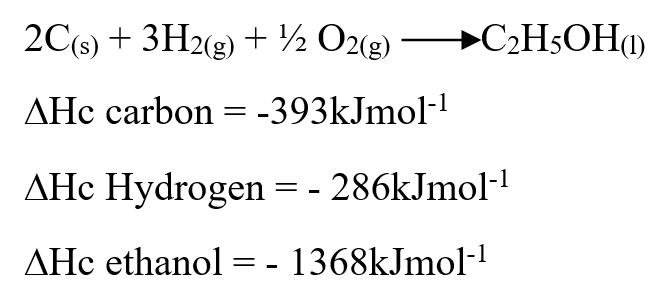
​Use the information below to answer the questions that follow Ethanol is formed as shown below

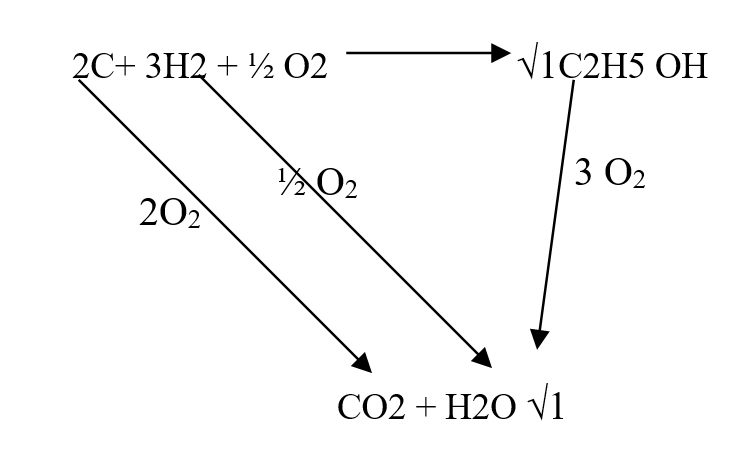
​Draw the energy cycle diagram for the formation and combustion of ethanol and calculate the heat of formation of ethanol (3mks)

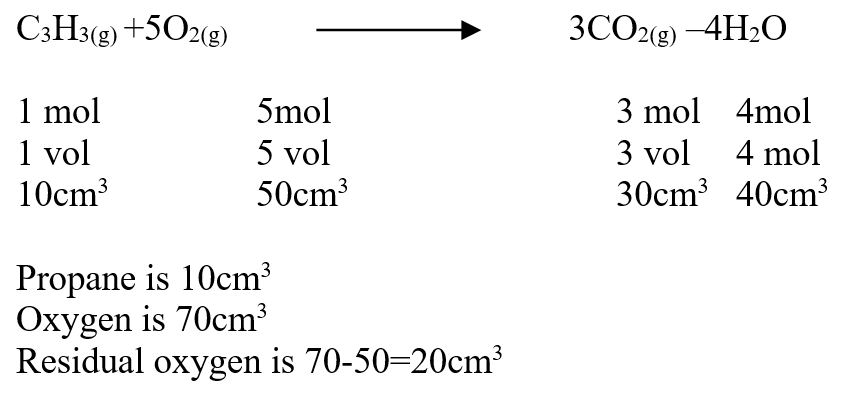
A volume of 80cm3 of a mixture of propane (C3H8) and oxygen was ignited in an experiment. The products were cooled and passed through aqueous sodium hydroxide. The final volume was reduced by 30cm3

a) Write the equation for the combustion of propane (1mk)

b) Determine the volume of;

i) The component of the original mixture (2mks)

ii) Residual oxygen (1mk)

​a) State three differences between chemical and nuclear reactions. (3mks)

Chemical reaction

Nuclear reaction

  • It takes place on the outer
  • Take place within the nucleus
  • Heat energy released is less
  • Heat energy released is large
  • Involves electrons
  • Involves neutrons and electrons
  • Affected by environmental factors
  • No affected by the environmental factors
  • such as temperature and pressure

(any three 3mks)

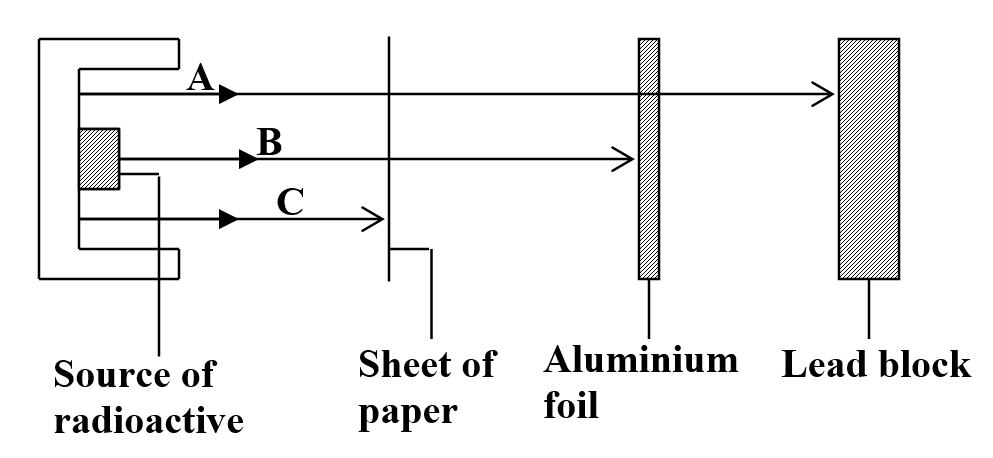
b) Study the figure below and answer the questions that follow

Identify the radiations A, B and C (3mks)

  • A-Gamma rays
  • B-Beta rays
  • C-Alpha rays


RCOO – Na+ and RCH2OSO3 – Na+ represent two types of cleansing agents

​a) Name the class of cleansing agent to which each belongs (1mk)

​b) Which one of the two cleansing agents is likely to pollute the environment. Explain. (2mks)

RCH2OSO3-Na+

Because it contains long chains of alkylbenzene and sulphate which is difficult to be broken by bacteria action

BELOW IS A SAMPLE OF CHEMISTRY PAPER ONE

KCSE CLUSTER TESTS 10

Chemistry Paper 1

1.

Describe the non–luminous flame of a Bunsen burner and give a reason why it’s preferred when heating substances in the laboratory. ……………………………………………………………………………………………….. ……………………………………………………………………………………………….. ……………………………………………………………………………………………….. ………………………………………………………………………………………………..

 3 marks

2.

Study the diagram shown below to answer the questions that follow. The curve shows the heating curve of water in the laboratory.

i) At what temperature does the water boil? (1mark)

…..………………………………………………………………………………………

ii) Is the curve for pure water or impure water? Give a reason for your answer. (1mark) …………………………………………………………………………………………… ……………………………………………………………………………………………

iii) Give the effect of impurities on the boiling point of water. (1mark)

…………………………………………………………………………………………… ……………………………………………………………………………………………

 3 marks

3.

Calcium carbonate reacts with dilute sulphuric VI acid to form a gas and a salt. i) Write an equation for the above reaction (1mark) ……………………………………………………………………………………………

……………………………………………………………………………………………

ii) Why would the above reactants not be suitable for the preparation of the above gas in the laboratory? (2marks) ……………………………………………………………………………………………

……………………………………………………………………………………………

…………………………………………………………………………………………

 3 marks

4.

Excess magnesium ribbon sample was heated in equal volumes of:-

i) Pure oxygen gas

ii) Air

a) Why was the mass of the resulting product in (ii) more than in (i)? (1mark)

………………………………………………………………………………………

………………………………………………………………………………………

b) Write the equations for the reactions in part (ii) (2marks)

………………………………………………………………………………………

………………………………………………………………………………………

………………………………………………………………………………………

 3 marks

5.

The set-up below was used to prepare dry hydrogen gas. Study it and answer the questions that follow.

i) Is the method of collecting the gas correct? Give a reason. (1mark)

…………………………………………………………………………………………… ……………………………………………………………………………………………

ii) What would be liquid Y? (1mark)

…………………………………………………………………………………………… ……………………………………………………………………………………………

iii) Give two physical properties of hydrogen gas. (1mark)

…………………………………………………………………………………………… ……………………………………………………………………………………………

 3 marks

6.

Study the information tabulated below to answer the questions that follow

a) Write the electron arrangement of the

(i) Atom of Y ( ½ mark)

…………………………………………………………………………………………………… ……………………………………………………………………………………………………

(ii) Ion of X ( ½ mark)

…………………………………………………………………………………………………… ……………………………………………………………………………………………………

b) Compare the ionic radius of Y with its atomic radius (2marks)

…………………………………………………………………………………………………… …………………………………………………………………………………………………… …………………………………………………………………………………………………… ……………………………………………………………………………………………………

 5 marks

7.

A student lowered burning magnesium in a gas jar of carbon (IV) oxide as shown in diagram

a) State and explain the observation made in the gas jar. (2marks)

……………………………………………………………………………………………… ………………………………………………………………………………………………

b) Write the equation of the reaction that takes place in the gas jar. (1mark) ……………………………………………………………………………………………… ………………………………………………………………………………………………

 3 marks

8.

a) Using a dot (.) and cross (x) to represent the outermost electrons, draw diagrams to show the bonding in magnesium sulphide. (1 ½ marks)

b) State the structure of the above compound. ( ½ mark)

…………………………………………………………………………………………………… ……………………………………………………………………………………………………

c) Give two properties of substances with the above structure. ( ½ mks) …………………………………………………………………………………………………… ……………………………………………………………………………………………………

 3.5 marks

9.

Given sodium carbonate solid, lead (II) nitrate solid and water, explain how you can obtain a solid sample of Lead (II) carbonate. …………………………………………………………………………………………………… …………………………………………………………………………………………………… …………………………………………………………………………………………………… ……………………………………………………………………………………………………

 3 marks

10.

a) State and explain the observations made when chlorine gas is bubbled through a solution of potassium bromide. (2marks) …………………………………………………………………………………………………… …………………………………………………………………………………………………… ……………………………………………………………………………………………………

b) Write the ionic equation for the reaction that took place in the above reaction. (1mark) …………………………………………………………………………………………………… ……………………………………………………………………………………………………

 3 marks

11.

The diagram below shows part of the Solvay process.

a) Name solid X (1mark)

………………………………………………………………………………………………

b) State the process taking place in chamber L (1mark)

……………………………………………………………………………………………… ………………………………………………………………………………………………

c) State two uses of sodium carbonate (1mark)

………………………………………………………………………………………………

 3 marks

12.

100cm3of methane gas diffused through a porous partition in 40 seconds. How long would it take 90cm3of ozone gas to diffuse through the same partition? C=12, H=1, O =16

 3 marks

13.

Calculate the volume of oxygen produced when 10g of silver nitrate was completely decomposed by heating at (s.t.p) (Ag =108, N=14, O = 16) Molar gas volume at s.t.p= 22.4dm3

 3 marks

14.

The scheme below shows some reactions starting with ethene. Study it and answer the questions that follow

a) Name substance

(i) X……………………………………..(1mark)

(ii) N…………………………………….( 1mark)

b) Name reagent M…………………………………………..( 1 mark)

c) Ethene undergoes polymerization to form a polymer. Give an equation for the reaction and name the product. (1 ½ marks) ……………………………………………………………………………………………… ………………………………………………………………………………………………

 4.5 marks

15.

Hydrogen sulphide gas was bubbled through a solution of zinc nitrate for some time. i) State the observation made. (1mark) ……………………………………………………………………………………………

……………………………………………………………………………………………

ii) Where should the experiment be carried out and why? (1mark)

…………………………………………………………………………………………… ……………………………………………………………………………………………

iii) Write the equation of the reaction that occurs (1mark)

…………………………………………………………………………………………… ……………………………………………………………………………………………

 3 marks

16.

A solution of hydrogen chloride gas in water conducts an electric current, while that of hydrogen chloride in methylbenzene does not conduct. Explain. ……………………………………………………………………………………………… ……………………………………………………………………………………………… ……………………………………………………………………………………………… ………………………………………………………………………………………………

 2 marks

17.

The scheme below represents reactions starting with X solid

i) Identify solid X (1mark)

……………………………………………………………………………………….

ii) Write an ionic equation to show the formation of white precipitate. (1mark)

………………………………………………………………………………………..

………………………………………………………………………………………..

iii) Why would gas S not form a white precipitate with a solution of sodium hydroxide (1mark) ………………………………………………………………………………………..

……………………………………………………………………………………….. .

 3 marks

18.

The following results were obtained trying to determine the solubility of copper (II) sulphate in water at 400C. Mass of empty dish16.8g, mass of dish + saturated solution at 400C =26.9g, mass of dish + solid CuSO4 after evaporation to dryness = 17.8g. Calculate the mass of saturated solution containing 70g of water at 400C.

 3 marks

19.

When 16g of ammonium nitrate was dissolved in 100cm3 of water at 250C, the temperature of the solution drops to 190C. a) Calculate the molar enthalpy of solution of ammonium nitrate (3mk)

(N = 14, O= 16, H=1 Specify heat capacity of water =4.2kJkg-1k-1)

b) Is the enthalpy change endothermic or exothermic? Give a reason (1mark)

………………………………………………………………………………………..

………………………………………………………………………………………..

………………………………………………………………………………………..

 3 marks

20.

Ammonia gas was passed into the water as shown below.

a) What is the use of the inverted funnel. (1mark)

………………………………………………………………………………………..

………………………………………………………………………………………..

………………………………………………………………………………………..

b) Explain why the pH of the solution is above 7. (1mark)

………………………………………………………………………………………..

………………………………………………………………………………………..

………………………………………………………………………………………..

 2 marks

21.

The set-up below was used to carry out the electrolysis of lead bromide. Study it and answer the questions that follow.

a) Identify electrodes U and T. (1mark)

………………………………………………………………………………………..

………………………………………………………………………………………..

b) Identify with reason one missing condition in the above set-up. (2marks)

………………………………………………………………………………………..

………………………………………………………………………………………..

………………………………………………………………………………………..

 3 marks

22.

a) Name the following compounds

 2 marks

23.

25cm3 of 0.12M Potassium Hydroxide solution required 30cm3 of a solution of a dibasic acid (H2X) for complete neutralization. The acid contained 3.15g per 500cm3 solution. Calculate

(i) The molarity of the acid solution. (2marks)

………………………………………………………………………………………..

………………………………………………………………………………………..

………………………………………………………………………………………..

(ii) The relative molecular mass of the acid. (2marks)

………………………………………………………………………………………..

………………………………………………………………………………………..

………………………………………………………………………………………..

 4 marks

24.

A mixture of ammonium chloride and sodium nitrate was heated together in a round-bottomed flask to produce gas X.

i) Identify gas X ( ½ marks)

………………………………………………………………………………………..

………………………………………………………………………………………..

ii) Write equations to show how gas X is formed. (2marks)

………………………………………………………………………………………..

………………………………………………………………………………………..

………………………………………………………………………………………..

iii) Why would gas X not be collected over cold water? ( ½ marks)

………………………………………………………………………………………..

………………………………………………………………………………………..

 3 marks

25.

Solid P when heated gives a black powder Q and a colourless gas that forms a white precipitate in lime water. When dilute Sulphuric (VI) acid is added to the powder Q, a pale blue solution is formed.

a) Give the chemical formula of i) Solid P (1mark)

………………………………………………………………………………………..

………………………………………………………………………………………..

ii) Solid Q (1mark)

………………………………………………………………………………………..

………………………………………………………………………………………..

iii) Write an equation for the reaction that takes place (1mark)

………………………………………………………………………………………..

………………………………………………………………………………………..

 3 marks

26.

In an experiment, sulphur (IV) oxide gas was bubbled into the water followed by chlorine gas. The resulting colourless solution gave a while precipitate when mixed with barium chloride solution. Explain these observations.

………………………………………………………………………………………..

………………………………………………………………………………………..

………………………………………………………………………………………..

………………………………………………………………………………………..

………………………………………………………………………………………..

 3 marks

27.

5.0g of calcium carbonate were allowed to react with 25cm3 of 0.1M hydrochloric acid until there was no further reaction. Calculate the mass of calcium carbonate that remained unreacted. (Ca =40, C= 12,O=16) (3marks)

………………………………………………………………………………………..

………………………………………………………………………………………..

………………………………………………………………………………………..

………………………………………………………………………………………..

 3 marks


BELOW IS A SAMPLE OF CHEMISTRY PAPER 1 MARKING SCHEME

KCSE CLUSTER TESTS 16

Chemistry Paper 1 Marking Scheme

1.

PAPER 1

1. 

(ii) Electronic configuration 5 :8:2

(iii)Both atoms are period 3. X has a larger atomic radius than Y√ ½. Since Y has a higher nuclear charge ⁄⁄ more protons√ ½.

 4 marks

2.

(a) It is the exchange of ions during a chemical reaction resulting in the formation of an insoluble salt and a soluble salt.

(b)To solution of sodium sulphate add lead II nitrate solution. Filter √ ½ the precipitate and wash it with distilled water. The precipitate is √ ½ 4 PSO.

 3 marks

3.

.(b) Each has a molecular of 44. Hence diffuse at the same rate under similar conditions.√ 1

 3 marks

4.

 3 marks

5.

(a) bleaches by reduction(removal of Oxygen)in presence of sunlight. Oxygen is replaced.

(b) Calcium bisulphate.

(c) It removes Sulpher (IV) Oxide from the air thus reducing the pollution.

 4 marks

6.

(a) Equilibrium shifts to the left favouring backward reaction and green colour are increased.

(b) Forward reaction favoured equilibrium shifts to the right and yellow colour dominates.

 2 marks

7.

(b). Nuclear fission-process by which leavings nuclide split when bombarded by a fast-moving neutron. In the process, energy is released. Nuclei at high velocity. In the process, energy and neutrons are released.

 4 marks

8.

(i)Fractional crystallization.

 3 marks

9.

(ii) Addition polymerisation.

 2 marks

10.

(i) Heating.

(ii) To absorb ⁄⁄ dissolve Hydrogen chloride fumes.

(iii) By Downward delivery tube⁄⁄upward displacement of air.

 4 marks

11.

(a) Silicon dioxide ⁄⁄ 2 SiO ⁄⁄silicon IV oxide and Aluminium oxide ⁄⁄ 3 2OAl.

(b) Provide carbon IV oxide ⁄⁄ 2 CO that reacts with coke to release CO which is a reducing agent.

―Provide Calcium oxide ⁄⁄ CaO that removes impurity silica as Calcium silicate.

 3 marks

12.

(a) Residue is yellow when hot, white on cooling: Brown fumes formed.

(b)Gas A is Oxygen.

 3 marks

13.

 3 marks

14.

(a) Lowers the melting point.

(b) Cleaning of ice from roads.

―Extraction of metals.

 3 marks

15.

Both fully lionises in water ⁄⁄ strong acid-strong base recast ion). Ammonium hydroxide partially ionises and therefore energy is used up to ionise them completely.

 2 marks

16.

(a) Concentrated sulphuric acid dehydrates sugar to form black carbon.

(b) Oxygen in the air, in the presence of sunlight replaces the Oxygen removed from the material during bleaching.

 2 marks

17.

(a) The volume of a fixed mass of gas is inversely proportional to its pressure at a constant temperature.

(c) When volume is decreased at a constant temperature, gas particles have a shorter distance before colliding with each other and the walls of the container. The collisions become more frequent which increased pressure.

 2 marks

18.

(ii) Sample B.Has temporary hardness which can be removed by precipitating  from soluble hydrogen carbonates as Insoluble carbonates

 2 marks

19.

(i) Increases the electrical conductivity of water by providing more free ions.

(ii) 

 2 marks

20.

At high temperatures, water molecules have higher Kinetic energy-thus increasing the frequency of collision of the molecules with magnesium.

 2 marks

21.

(a) M in the box with atomic number11.

(b) R in the box with atomic number 7

 2 marks

22.

Reducing power increase from lithium to caesium.

This is due to the increase in atomic size which puts the outermost electron further away from nuclear charge hence easily lost.

 2 marks

23.

(a)Dissolve the mixture in ether and filter to remove camphor. They dissolve the residue in ethanol to remove sugar.

The residue after filtering is Alum.

(b)Dissolve the mixture in ether and filter to remove camphor as the filtrate. Dissolve the residue in ethanol and then filter to set Alum. The filtrate is a sugar solution. Evaporate it to its dryness to set sugar.

 4 marks

24.

(a)Chloride Oxidises Sulphide ions to pale-yellow sulphur and itself reduced to hydrochloric acid.

(b) 

 2 marks

25.

(a) Mass of salt A that forms crystals when cooled

Mass of salt B that forms Crystals when cooledHence total mass

(b)Its solubility would increase with an increase in temperature because it requires heat to dissolve (the endothermic process is favoured by high temperature.

 2 marks

26.

(a) . ,2,1 ane dibromoeth

(b)Ethanol.

(c) . Ethane

 3 marks

27.

(a) (i)Zinc atoms ⁄⁄. Zn 3

(ii)Silver ions ⁄⁄. Ag

(b) The blue colour of the solution fades, there is arise in temperature ⁄⁄ apparatus feel warm, A brown/ red solid deposited.

 3 marks

28.

Mixture sulphur power with warm Carbon disulphide.

―Filter the mixture.

―Allow the filtrate to evaporate slowly at room temperature.

―Pale yellow octahedral crystals are formed.

 2 marks

29.

(a) Behaviour where a substance shows both acidic and basic properties.

(b)  .

(c)M is a stronger acid than L. It ionizes fully producing more hydrogen ions which react to give more hydrogen gas than L.

 2 marks